
Every mini excavator purchase forces one decision that operators feel on every shift: open canopy or enclosed cabin. It sounds like a small detail next to horsepower, dig depth, and attachments, yet it shapes how comfortable your operator stays, how steadily the machine runs through the seasons, and how much you pay both upfront and down the road. Choose the wrong protection, and you either burn budget on features you rarely touch or send your operator into weather that quietly drags down output all day long.
This guide walks contractors and equipment buyers through the comparison in plain terms. We look at what actually separates the two configurations, lay out the real trade-offs, and finish with a decision framework you can apply to your own fleet.
Here’s what you’ll walk away with:
- The honest differences in weather protection, visibility, comfort, and cost
- The situations where a canopy is the smarter buy, and where a cabin earns every dollar
- A clear framework to match the configuration to your work
What Actually Separates the Two
Both configurations rest on the same safety foundation: a rollover protective structure, or ROPS, engineered to protect the operator if the machine tips. What changes is everything built around that frame.
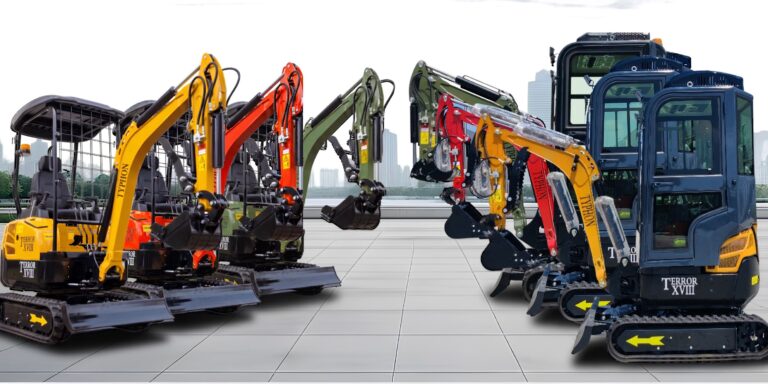
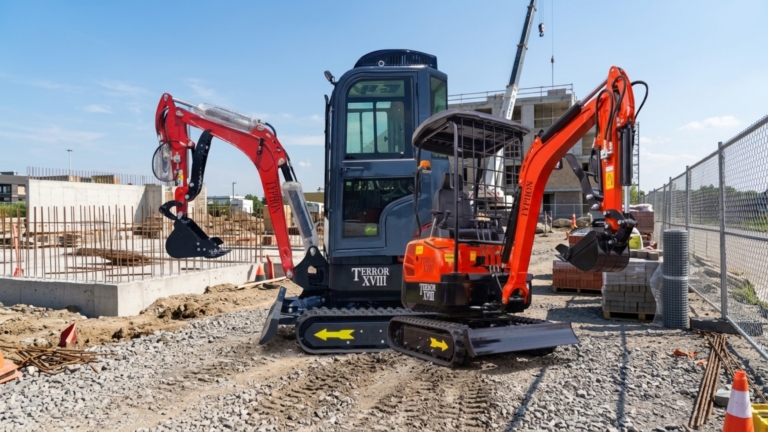
A canopy leaves the ROPS open. You get a sturdy overhead roof and support posts, but no walls, no door, and no glass. The operator sits in the open air, shaded from sun and shielded from a light drizzle, while the site’s weather, dust, and noise stay within arm’s reach.
A cabin wraps that same ROPS frame in an enclosed shell, adding glass on all sides, a sealing door, and usually heating and air conditioning. The operator works inside a controlled space, cut off from the elements.
Boil it down and the difference is philosophy. The canopy favors openness, simplicity, and a lower price. The cabin favors comfort, control, and protection in any weather.
Weather Protection
This is the split that matters most to daily productivity. A canopy does fine on a clear day or during a brief passing shower, but it offers little defense against driving rain, biting wind, summer heat, or winter cold. Whatever the sky delivers, your operator feels it. That works in gentle climates and turns punishing where conditions swing hard.
A cabin removes weather from the equation. Climate control keeps the operator warm through frosty mornings, cool through blazing afternoons, and dry when the rain sets in. On projects that push through cold snaps, heat waves, or a long wet season, that sealed environment keeps the machine working when a canopy would force the crew to slow down or pull back.
Bottom line: Regular rough weather tips the scale toward a cabin, which protects both the operator and the schedule.
Visibility and Awareness
Here’s where buyers often guess wrong, assuming the enclosed option automatically wins. The truth is more balanced, and each configuration gives something up.
A canopy delivers clean, uninterrupted sightlines. With no glass to catch glare and no pillars to obstruct the view, the operator sees every angle of a tight, busy site. That open awareness pays off when ground workers are close and spatial judgment counts.
A cabin still offers strong visibility through large panes of glass, but frames, seams, and reflections introduce small blind spots the open canopy simply doesn’t have. Manufacturers keep shrinking those gaps with wider glass and slimmer posts, yet the canopy retains a narrow edge for pure, unobstructed sight.
Bottom line: On crowded or confined sites where awareness is everything, a canopy keeps the whole scene in view.
Operator Comfort
Comfort isn’t a luxury line item. It drives how alert an operator stays, how few mistakes they make, and how much work they finish before fatigue sets in. This is the cabin’s strongest argument.
Sealed away from dust, noise, wind, and temperature swings, an operator in a cabin stays sharper across a ten- or twelve-hour day. Climate control and reduced sound levels ease the physical toll, and a fresher operator makes better decisions late in the shift when errors tend to creep in.
A canopy puts the operator in direct contact with the whole environment: engine noise, blowing grit, and the full force of the weather. For quick jobs in pleasant conditions, none of that registers. On long days, or in the choking dust of demolition and land clearing, the gap in comfort becomes impossible to ignore.
Bottom line: Long shifts and harsh sites make a cabin’s fatigue reduction well worth having.
Cost and Ownership
The financial picture reaches well beyond the sticker, so weigh both the price and the return over the machine’s life.
- Upfront price: The same model costs noticeably less with a canopy than with an enclosed cabin.
- Productivity return: A cabin’s comfort can lift daily output and help you hold onto skilled operators, which softens the higher price on demanding work.
- Resale: Cabin-equipped machines tend to attract a wider pool of buyers later, particularly in colder markets.
- Upkeep: A cabin brings extra systems to maintain, from HVAC to door seals, while a canopy keeps servicing simple.
Bottom line: The canopy is cheaper to buy, but a cabin can recover its premium through steadier output and stronger resale.
Pros and Cons at a Glance
Canopy (Open ROPS)
Pros
- Lower purchase price
- Clear, all-around visibility
- Simple, quick access to the seat
- Fewer systems to service
- Lighter overall weight
Cons
- Minimal weather protection
- No barrier against dust or noise
- More operator fatigue on long shifts
- Weaker resale appeal in cold regions
Enclosed Cabin
Pros
- Full protection from weather, dust, and noise
- Climate control for year-round comfort
- Lower operator fatigue across long days
- Broad resale appeal in many markets
Cons
- Higher purchase price
- Minor blind spots from frames and glass
- More systems to maintain
- Added weight
When the Canopy Is the Right Call
A canopy makes sense when your conditions stay mild and your priorities center on value and simplicity. Picture a landscaping crew in a warm, dry region running short jobs across fenced yards. They rarely fight the weather, they need every sightline on tight lots, and the lower price frees up budget for other equipment. That crew gains almost nothing from a cabin.
Lean toward a canopy when your work looks like this:
- Warm, dry climates where weather protection is seldom a factor
- Short or seasonal jobs that don’t demand all-day comfort
- Budget-first purchases where the lower entry price carries weight
- Tight, crowded sites where open visibility sharpens safety
- Light-duty and landscaping tasks in fair conditions
If that describes most of your days, a canopy covers your needs without charging you for protection you’d rarely use.
When the Cabin Is Worth It
A cabin justifies its price the moment conditions get serious or shifts stretch long. Picture a utility contractor working year-round in a cold, wet climate, running full days in trenching and demolition. For that crew, a cabin isn’t a comfort upgrade; it’s what keeps the machine productive in January and keeps a skilled operator on the payroll.
Reach for a cabin when your work involves:
- Cold, wet, or extreme climates that would otherwise stall production
- Long shifts where fatigue directly threatens output and safety
- Dusty settings like demolition, land clearing, and dry aggregate work
- High noise exposure that a sealed cabin meaningfully tames
- Year-round use where all-weather capability keeps the machine earning every season
When your operators face tough conditions day after day, the cabin’s protection pays for itself faster than the price tag suggests.
A Framework for Deciding
Answer four questions honestly, and the right configuration usually reveals itself.
1. What weather do you actually work in?
Judge by your worst conditions, not your average day. Mild and dry favors a canopy. Cold, wet, or extreme points firmly to a cabin.
2. How long do your operators run the machine?
Short, light sessions suit a canopy. Full-day, back-to-back shifts reward the reduced fatigue only a cabin delivers.
3. What are your sites like?
Dusty, loud environments such as demolition and clearing call for an enclosed cabin. Clean, open, fair-weather sites make a canopy plenty.
4. What do your budget and utilization look like?
If cost leads and use is seasonal, the canopy wins. If the machine works year-round and comfort drives production, the cabin’s premium earns its keep.
When the answers pull in different directions, let your most frequent and most demanding conditions settle it. And if you genuinely split your time, remember that a fleet can carry both, matching each machine to the work it does best.
Conclusion
Canopy versus cabin isn’t a contest for the better configuration in the abstract. It’s a question of fit. A canopy wins on price, visibility, and simplicity, making it the natural choice for mild climates, short shifts, and lean budgets. A cabin wins on weather protection, comfort, and all-season productivity, making it the clear pick for harsh conditions, long hours, and dusty or noisy work.
Your next step is simple. Measure your climate, shift length, site conditions, and budget against the framework above, then talk it through with an equipment partner who understands your work. Make that choice with care, and you’ll put an operator in the right seat on every job for years to come.