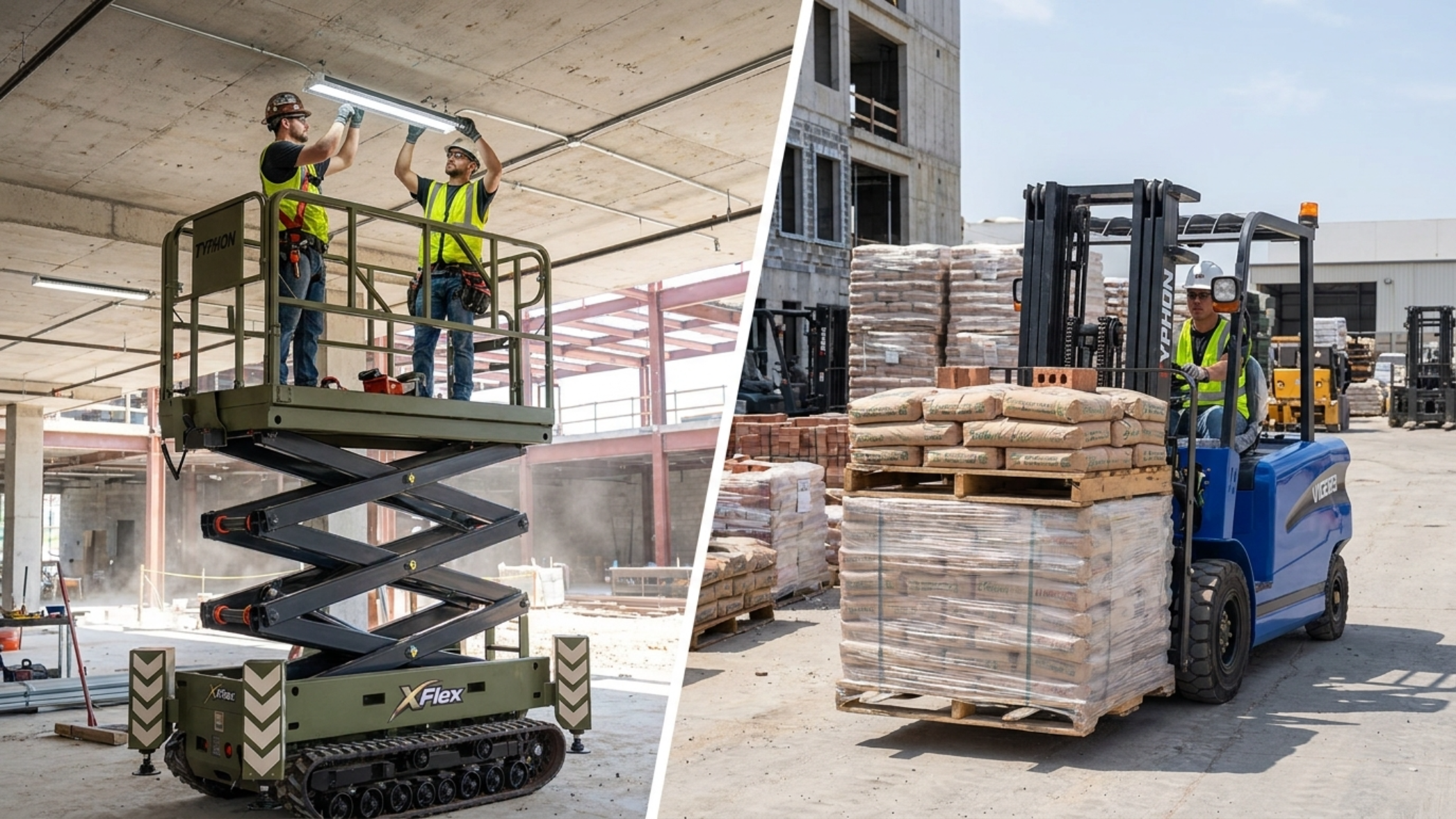
The lift you choose shapes how safely and efficiently your crew works at height or moves heavy loads. Scissor lifts and forklifts both solve real problems on construction sites and in warehouses, but they solve very different ones. Pick the wrong machine, and you either strain to reach a job it was never built for or spend more than the work demands.
This guide gives construction business owners, contractors, warehouse managers, and equipment buyers a clear, practical comparison. By the end, you will understand the core difference between these two machines, the honest advantages and limitations of each, and a simple framework to match the right one to your work.
Here’s what you’ll take away:
- The key differences in lift height, load capacity, and mobility
- The primary uses where each machine clearly wins
- A decision framework, plus rent-versus-buy guidance to invest with confidence
Understanding the Core Difference
The split between these machines comes down to what they lift and where. That single distinction drives every other difference.
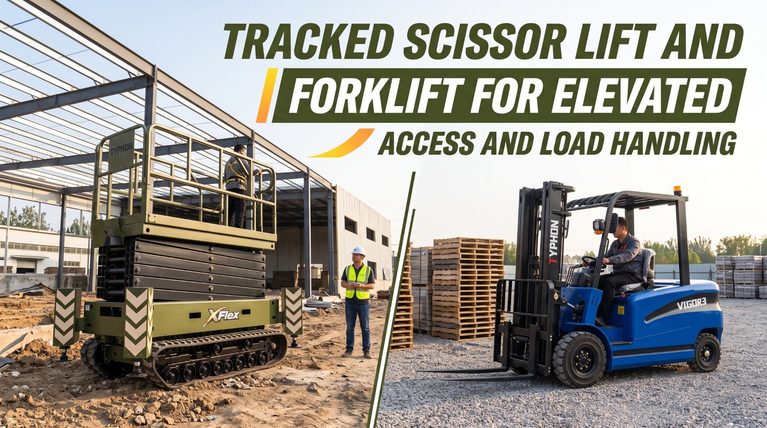
A scissor lift raises people and materials straight up on a stable work platform. Its crisscrossing “scissor” mechanism extends vertically to give workers a wide, elevated surface to stand on and work from. Its purpose is safe, productive work at height.
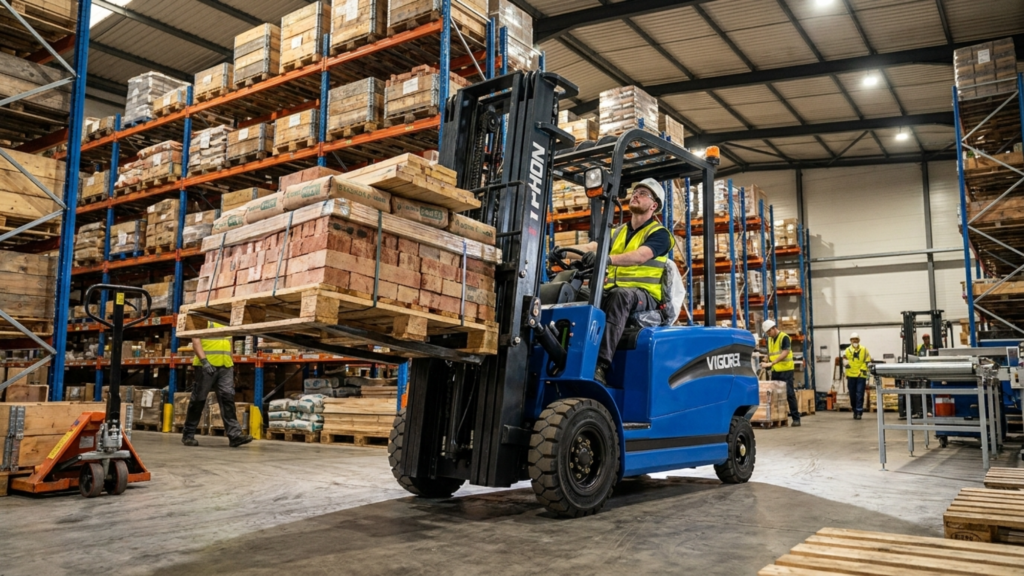
A forklift lifts and moves heavy loads horizontally and vertically using two forks at the front. It carries pallets, materials, and equipment across a site or warehouse, then stacks or places them where needed. Its purpose is material handling and transport.
Keep that contrast in mind: the scissor lift takes workers up to the work, while the forklift moves loads from one place to another.
Primary Uses and Applications
Each machine earns its place on specific jobs. Matching the tool to the task removes most of the guesswork before you compare specs.
Where Scissor Lifts Shine
Scissor lifts are built for elevated work that needs a stable platform and room for tools or a second worker. Common applications include:
- Overhead installation and maintenance such as electrical, HVAC, and lighting work
- Ceiling, wall, and interior finishing in warehouses, retail spaces, and offices
- Inventory access in high-rack storage areas
- Building maintenance and inspection on flat, stable surfaces
For example, an electrical contractor wiring a warehouse ceiling gains a wide, secure platform that lets two workers and their tools operate safely at height across a full workday.
Where Forklifts Shine
Forklifts are the backbone of material handling wherever heavy loads move regularly. Common applications include:
- Loading and unloading trucks and trailers
- Pallet stacking and retrieval in warehouses and distribution centers
- Transporting materials across construction sites and yards
- Handling bulky or heavy items that no crew should lift by hand
For example, a warehouse manager receiving daily pallet shipments relies on a forklift to unload trucks, stack racks, and keep product moving without slowing the operation.

Scissor Lift: Advantages and Limitations
A scissor lift is the right tool when work happens at height on stable ground. Understanding both sides helps you judge the fit honestly.
Advantages
- Large, stable platform that holds workers, tools, and materials together
- Straightforward operation that most workers learn quickly
- Vertical reach that replaces ladders and scaffolding safely
- Indoor-friendly models with electric power that run quietly and produce no emissions
Limitations
- Vertical movement only, with no ability to move loads horizontally the way a forklift can
- Best on flat, level surfaces, since rough or sloped ground limits many models
- Limited by height class, so reaching greater heights requires a larger, costlier unit
- Not a material transport tool, meaning it complements rather than replaces a forklift
If you’re dealing with repeated overhead work across a large indoor space, a scissor lift is almost always the safer, more productive choice over ladders.
Forklift: Advantages and Limitations
A forklift excels at moving weight, but it is not a work platform. Weigh these points against your typical tasks.
Advantages
- High load capacity that handles heavy pallets and bulky material
- Horizontal and vertical movement for transporting and stacking loads
- Versatility across indoor warehouses and outdoor sites, depending on the model
- Attachment options such as different forks, clamps, and booms for specialized handling
Limitations
- Not designed to lift workers, since using forks to raise people is unsafe and often prohibited
- Requires trained, certified operators, as improper use is a leading cause of workplace injury
- Terrain-specific models, meaning a warehouse forklift and a rough-terrain forklift are not interchangeable
- Tip-over risk when overloaded or operated on slopes without care
Common mistake: trying to reach elevated work by standing on a raised pallet. That practice is dangerous and points clearly to needing a scissor lift instead.
Scissor Lift vs Forklift: Comparison at a Glance
The table below lays out the key differences side by side to speed up your decision.
| Factor | Scissor Lift | Forklift |
|---|---|---|
| Primary function | Lifts workers and tools to height | Lifts and moves heavy loads |
| Lift height | Roughly 20–50+ feet depending on class | Typically up to 10–20+ feet for stacking |
| Load capacity | Lighter, sized for workers and tools | Heavy, from a few thousand pounds up |
| Movement | Vertical only | Horizontal and vertical |
| Maneuverability | Compact, tight-space friendly indoors | Agile in aisles, needs room to turn with loads |
| Indoor/outdoor use | Electric models indoors; rough-terrain models outdoors | Warehouse models indoors; rough-terrain models outdoors |
| Operator requirement | Basic training | Formal certification typically required |
| Cost | Generally lower purchase and operating cost | Higher, varies widely by capacity and type |
| Best applications | Overhead installation, maintenance, finishing | Loading, stacking, material transport |
The takeaway is simple. If your work centers on reaching height safely, the scissor lift fits. If it centers on moving weight, the forklift fits.
How to Choose the Right Machine
Work through four questions honestly, and the right machine usually becomes clear.
1. What Is the Core Task?
Start with the job itself. If workers need to perform tasks at height, choose a scissor lift. If the job is moving, stacking, or transporting heavy loads, choose a forklift. This single question resolves most decisions.
2. Indoor, Outdoor, or Both?
Match the machine to your environment. Electric scissor lifts and warehouse forklifts suit smooth indoor floors, while rough-terrain versions of both handle uneven outdoor ground. Confirm the model fits your surface before you commit.
3. What Are the Height and Weight Demands?
Define your real reach and load needs. Measure the maximum working height for elevated tasks, or the heaviest routine load for material handling, then size the machine with sensible margin rather than to an occasional peak.
4. Who Will Operate It?
Factor in training and certification. Forklifts typically require certified operators, while scissor lifts need basic training. Make sure your crew is prepared to run the machine safely before it arrives on site.
A quick reality check: many operations need both machines because they serve different purposes. A general contractor might run a scissor lift for interior finishing and a forklift for material handling on the same project.
Should You Buy or Rent?
Once you know the right machine type, the final question is ownership. The answer depends on how steadily you will use it.
Renting makes sense when:
- You need the machine for a single project or short timeframe
- The work calls for a type you will rarely use again
- You want current equipment without a large capital outlay
- You prefer to avoid maintenance, storage, and depreciation
Buying makes sense when:
- The machine will run consistently across months and years
- You need guaranteed availability on demand
- High, steady utilization spreads the cost over a long, productive life
- You want to build equity in an asset you can later resell
Many operations land on a hybrid approach, owning the machine they use constantly and renting the other to cover specific jobs. Compare your expected operating days against purchase price, operating costs, and your need for on-demand access.
Conclusion
The choice between a scissor lift and a forklift is less about which machine is better and more about which one fits your work. Here are the key takeaways:
- Scissor lifts raise workers and tools safely to height, making them ideal for overhead installation, maintenance, and interior finishing.
- Forklifts move and stack heavy loads, making them the backbone of loading, transport, and warehouse operations.
- The right choice comes down to your core task, your environment, your height and weight demands, and your operator readiness.
Your next step is straightforward. Assess your typical tasks, environment, and load or height requirements, then decide whether owning or renting fits your utilization. With those facts in hand, talk with a knowledgeable equipment partner who understands your work, and you’ll invest with confidence in a machine that delivers dependable value on every job. Reach out today for expert guidance and a quote you can count on.