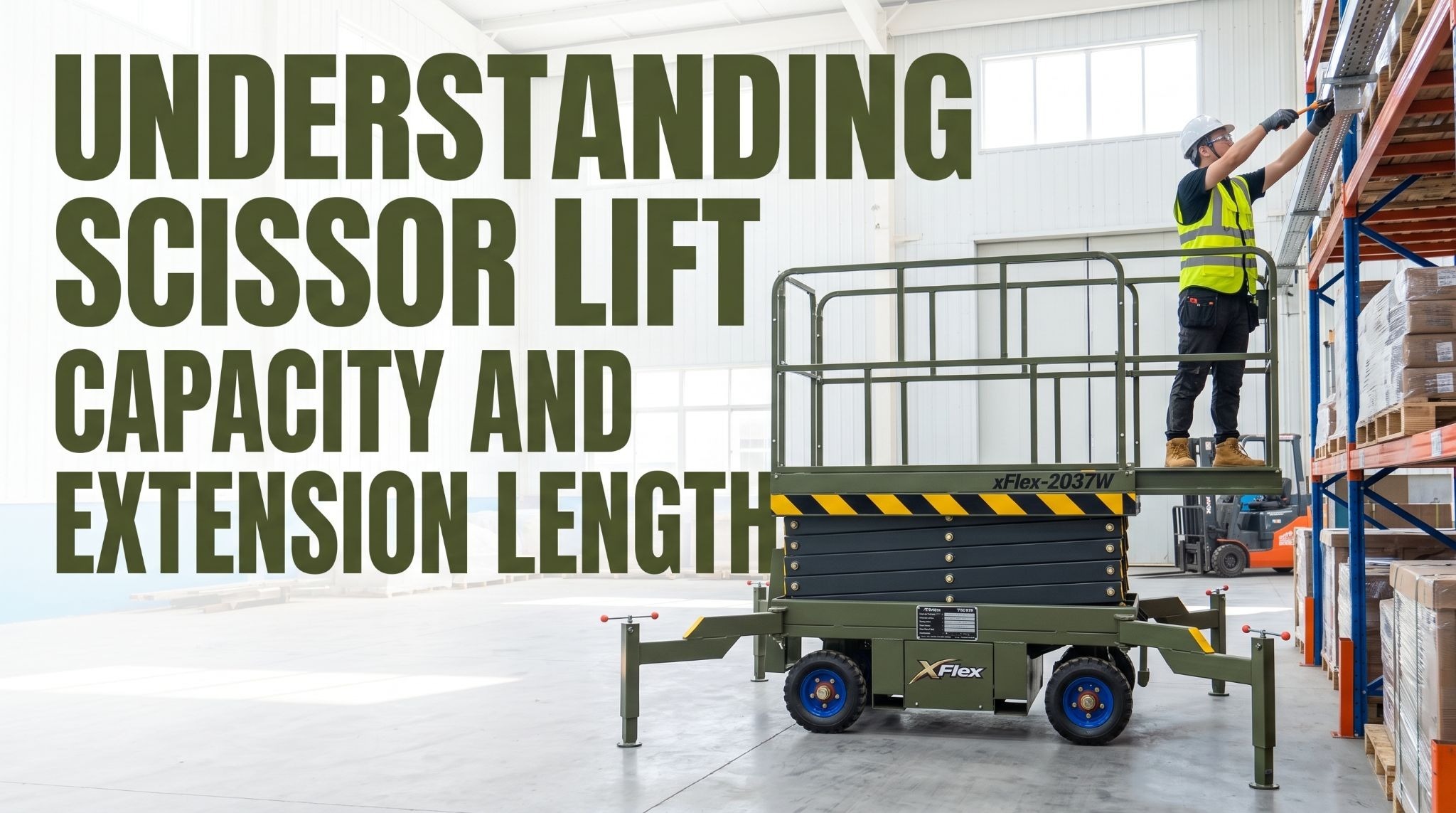
Platform capacity changes with deck position because extending the platform alters the load distribution and stability of the scissor lift. A capacity figure on the data plate should not automatically be treated as the allowable load in every configuration. When the deck extension moves outward, workers, tools, and materials sit farther from the machine’s center of stability, increasing the load moment and potentially reducing the permitted capacity. The extension improves working reach, but that added reach can come with a lower allowable load.
The capacity rating and extension position therefore need to be evaluated together during jobsite planning. Understanding how manufacturers establish platform capacity, how much usable reach the extension provides, and why the allowable load can change helps operators plan personnel and materials more accurately. Proper attention to platform configuration also reduces overload risk, limits unnecessary structural and hydraulic stress, and supports safe, productive operation throughout the scissor lift’s service life.
What Platform Capacity Actually Means
Platform capacity is the total weight a scissor lift is rated to carry on its deck, including everyone standing on it, all their tools, and every piece of material staged up there. It is the headline safety figure printed on the machine’s data plate, and it defines the ceiling you must never cross.
Manufacturers establish this rating through engineering analysis and standardized testing, factoring in structural strength, hydraulic lifting force, and the stability of the raised platform. The number is set with a safety margin, but that margin exists to absorb the ordinary surprises of real work, not to invite deliberate overloading.
Two related ratings often accompany the total. Many lifts specify a separate limit for the number of occupants and a distinct allowance for material weight. Reading both matters, because a deck rated for 750 pounds might cap occupants at two people, leaving a defined slice for tools and supplies rather than the full figure.
Bottom line: platform capacity is the combined weight ceiling for people, tools, and material, and it is the first number to confirm before anyone steps aboard.
What Deck Extensions Add in Reach
Most scissor lifts include a sliding deck extension, a section of platform that rolls out beyond the main railing to gain horizontal reach. This lets a worker close the gap between the machine and the work surface without repositioning the entire lift, which saves time and reduces the hazard of driving elevated across a floor.
The reach a deck extension provides is genuinely useful in tight or awkward layouts. Consider a few common situations:
- Reaching over fixed equipment or shelving that blocks the base from parking directly beneath the work.
- Servicing overhangs, ductwork, or signage that sits forward of the platform edge.
- Bridging a small gap to a wall or ceiling section without leaning past the rail.
Some models offer extensions at one or both ends, and certain machines allow a second bolt-on extension deck for still greater span. Each configuration expands where the crew can work, and that added flexibility is precisely why extensions are so popular on service and installation jobs.
The catch is that reach never comes free. Every inch the deck slides out changes the load the lift can safely bear, which brings us to the core relationship at the heart of this article.
Why Extending the Deck Lowers Allowable Load
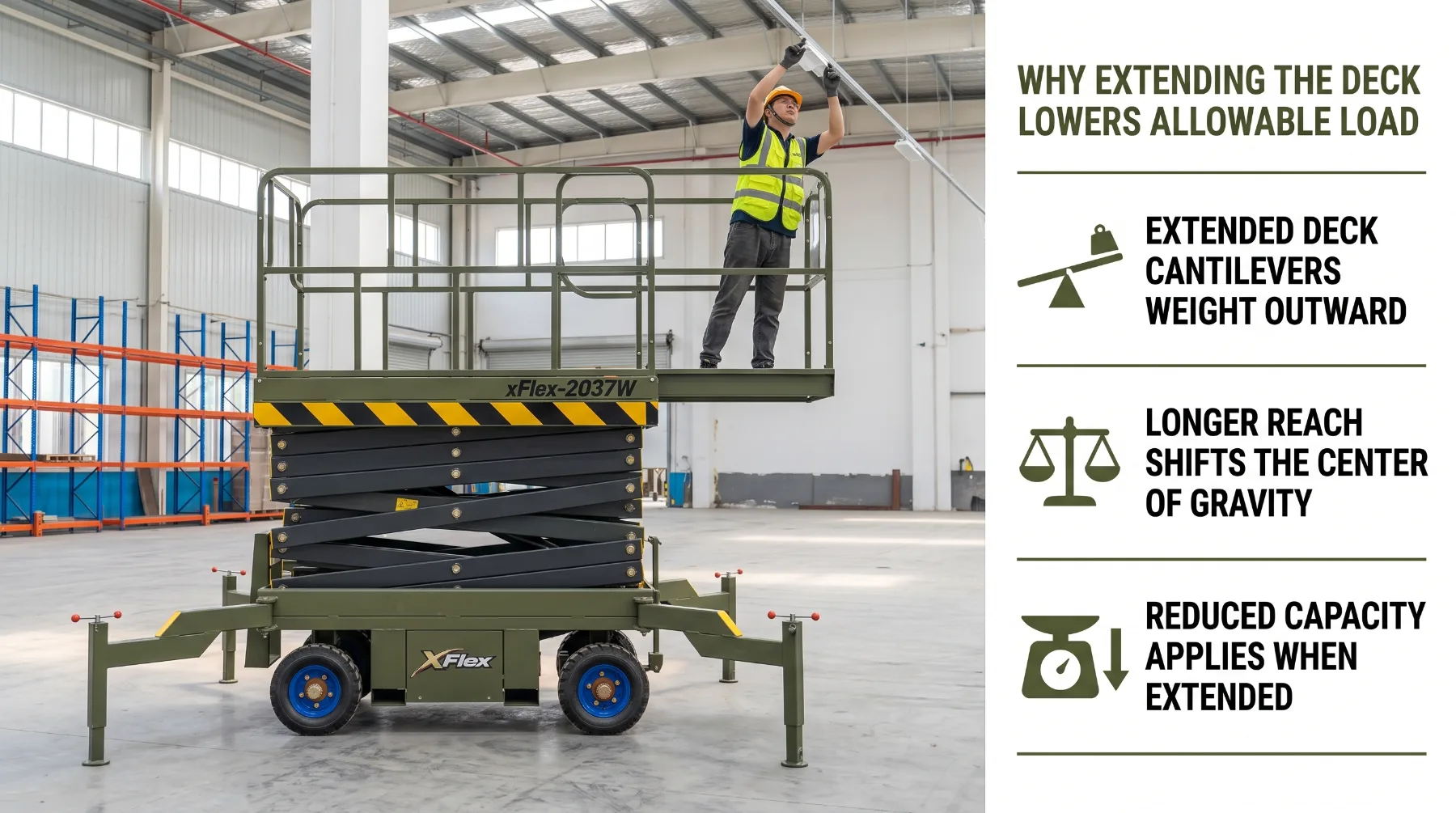
When you slide the deck extension out, the platform’s usable area grows, but the weight it can carry shrinks. This is not a design flaw. It is physics, and it stems from how load is distributed across the extended structure and how the machine’s balance responds.
An extended deck cantilevers weight outward, away from the lift’s supporting frame. That outward reach creates a longer lever arm, so the same load imposes greater stress on the platform structure and shifts the machine’s center of gravity toward its edge. To keep the lift stable and the structure within its limits, the manufacturer publishes a reduced capacity that applies whenever the extension is deployed.
The data plate makes this explicit. Look closely and you will typically find two capacity figures: one for the main platform with the extension retracted, and a lower one for the platform with the extension extended. A lift rated at 1,000 pounds retracted might drop to 500 pounds with the deck slid out and loaded on that section.
This dual rating is the single most misread detail on a scissor lift. Crews plan around the retracted number, then extend the deck for reach and unknowingly blow past the lower limit that now applies. Whenever the extension is out, the reduced figure is the only capacity that counts.
Real-World Implications for Crews and Job Planning
The capacity-versus-reach trade-off reshapes how a job should be planned before the lift ever rises. A supervisor who understands it sizes the machine to the heaviest task performed at full extension, not just the lightest work done on the retracted deck.
Picture a two-person crew installing overhead conduit. Together they weigh 400 pounds, their tools add 80, and they need to stage 150 pounds of conduit and fittings on the platform. On the retracted deck rated at 750 pounds, that 630-pound total sits comfortably within limits. Slide the extension out to reach the run, drop to a 500-pound extended rating, and the same load suddenly exceeds capacity by 130 pounds. The work didn’t change, only the deck position did.
That example shows why job planning must account for platform position, not just total weight. A crew forced to choose between reaching the work and staying within limits will sometimes make the wrong call under deadline pressure, which is exactly the scenario a good plan prevents.
The fix is to match equipment to the true demand. If the work requires both reach and a heavy load, the answer is a larger lift with a higher extended rating, or staging material in smaller batches so the deck never carries more than its extended limit allows. Deciding this in the planning phase costs nothing. Discovering it at height costs safety.
Operator Best Practices for Staying Within Limits
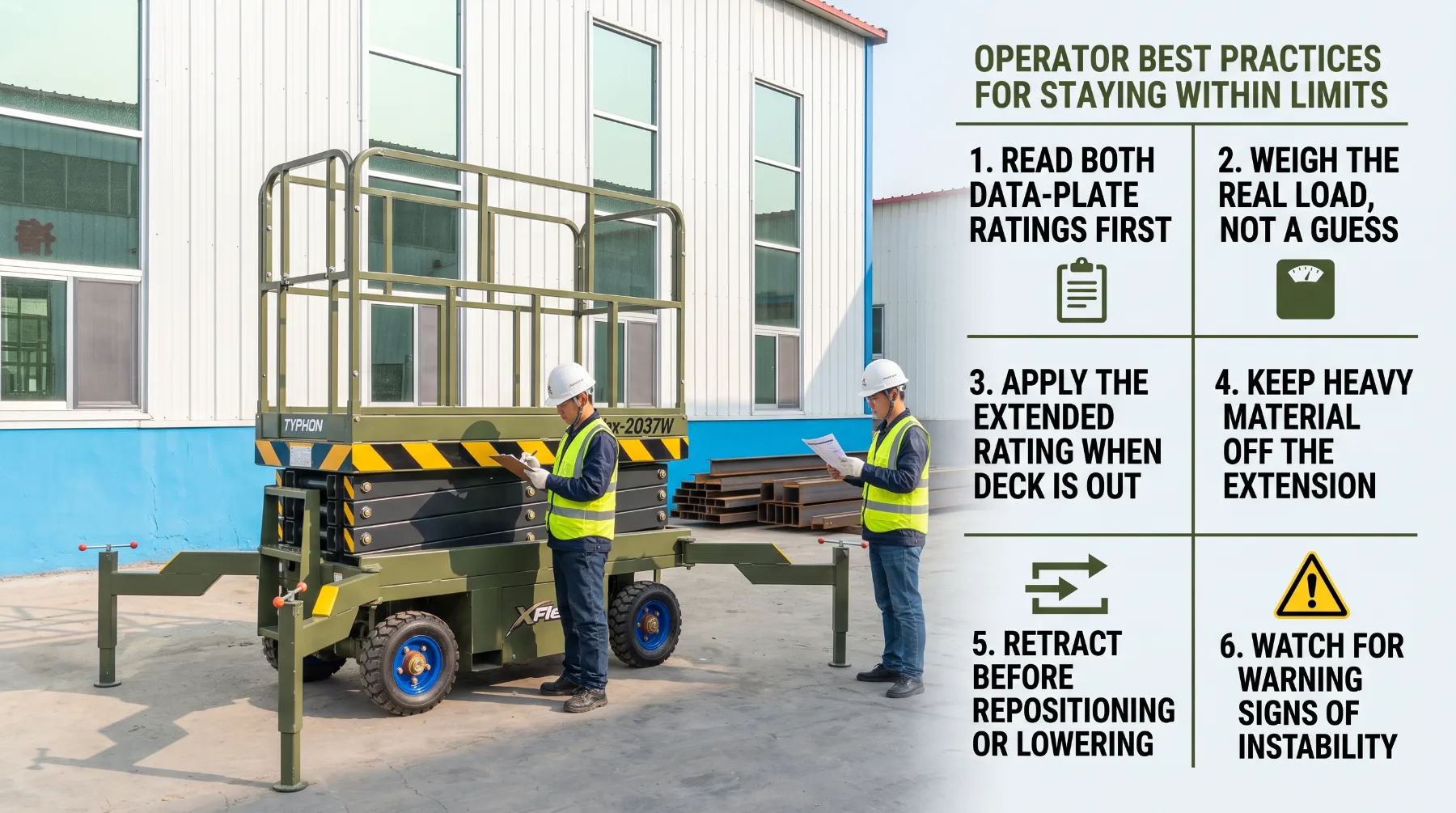
Even a correctly sized lift depends on disciplined operation. These habits keep every crew inside the safe envelope regardless of deck position:
- Read both data-plate ratings first. Before loading, confirm the retracted and extended capacities, plus any occupant limit. Know which figure will apply to the work ahead.
- Weigh the real load, not a rough guess. Add up occupants, tools, and material honestly. Rounding down to justify a shortcut is how overloads happen.
- Apply the extended rating whenever the deck is out. The instant the extension deploys, the lower number governs. Treat it as the only limit that exists in that configuration.
- Keep heavy material off the extension itself. Stage the weight over the main platform where the structure is strongest, and use the extension for reach rather than as a shelf for loads.
- Retract before repositioning or lowering. Slide the deck back in once the reaching task is done, restoring the machine’s stability for travel and descent.
- Watch for the warning signs. Unusual flex, a shifting feel, or any instability means the load or position is wrong. Lower, correct, and reassess before continuing.
Reinforce these steps with a quick pre-shift briefing. When every operator knows which capacity applies and why, the crew works faster because no one has to stop and second-guess whether the next load is safe.
Long-Term Durability and Compliance Considerations
Respecting the extended-capacity rating protects more than the crew on any single shift. It safeguards the machine and your standing with regulators across the equipment’s entire service life.
Repeatedly loading an extended deck beyond its rating stresses the platform structure, the pivot points, and the hydraulic system well past their design intent. That strain rarely fails all at once. Instead it accumulates as fatigue in the metal, wear in the joints, and premature aging of the lift mechanism, so a machine chronically overloaded on its extension ages far faster than its hour meter suggests.
Compliance carries its own weight. Workplace safety regulations require operators to follow the manufacturer’s load ratings, and the data plate is the legal reference for those limits. An overload incident that causes injury exposes the operation to citations, liability, and the loss of a safety record that took years to build. Inspectors and insurers both look for evidence that crews respect the posted capacities.
Resale and inspection outcomes follow the same logic. A lift operated within its ratings passes periodic structural inspections cleanly, holds its condition, and commands stronger buyer confidence. One pushed past its extended limit shows the telltale wear that fails inspections and depresses value.
Bottom line: honoring the extended rating is a durability strategy and a compliance safeguard, not just a rule for the moment.
Conclusion
The key to safe scissor lift operation is understanding how platform capacity changes when the extension is deployed. The retracted capacity does not automatically remain valid once the deck is extended because the additional reach changes the machine’s load distribution and stability. Before starting work, check the rated capacity for both positions, calculate the combined weight of workers, tools, and materials, and use the lower applicable rating when the extension is out. Keep heavier loads toward the main platform and avoid assuming that unused deck space means additional load capacity. The common mistake is loading the lift based on its maximum retracted rating and then extending the deck without reducing the load. Treat extension length and rated capacity as connected limits, and the scissor lift can maintain safer, more predictable performance at height.
Frequently Asked Questions
Why does my scissor lift have two different capacity numbers?
The two figures reflect two platform positions. The higher number applies when the deck extension is retracted and the load sits over the main structure. The lower number applies when the extension is slid out, because the extended deck cantilevers weight away from the frame, increasing structural stress and shifting the center of gravity. Whenever the extension is deployed, the lower rating is the only one that governs, so plan your load around it rather than the headline figure.
Can I put heavy tools or material on the deck extension itself?
It’s far safer to keep heavy loads over the main platform and use the extension only for reaching the work. The extension is the weakest point of the loaded structure and the farthest from the machine’s support, so concentrating weight there magnifies stress and instability. Stage your material over the main deck, step or reach onto the extension as needed, and always confirm the total stays within the extended capacity rating.
How do I know if I’ve exceeded the safe limit when the deck is extended?
Start by adding up the honest weight of everyone aboard, all tools, and all staged material, then compare that total against the extended-deck rating on the data plate. If the sum is higher, you are over the limit, even if the lift still seems to operate normally. Physical warning signs, unusual flex, a shifting or unstable feel, or sluggish response, mean you should lower immediately, remove weight, and reassess before continuing.