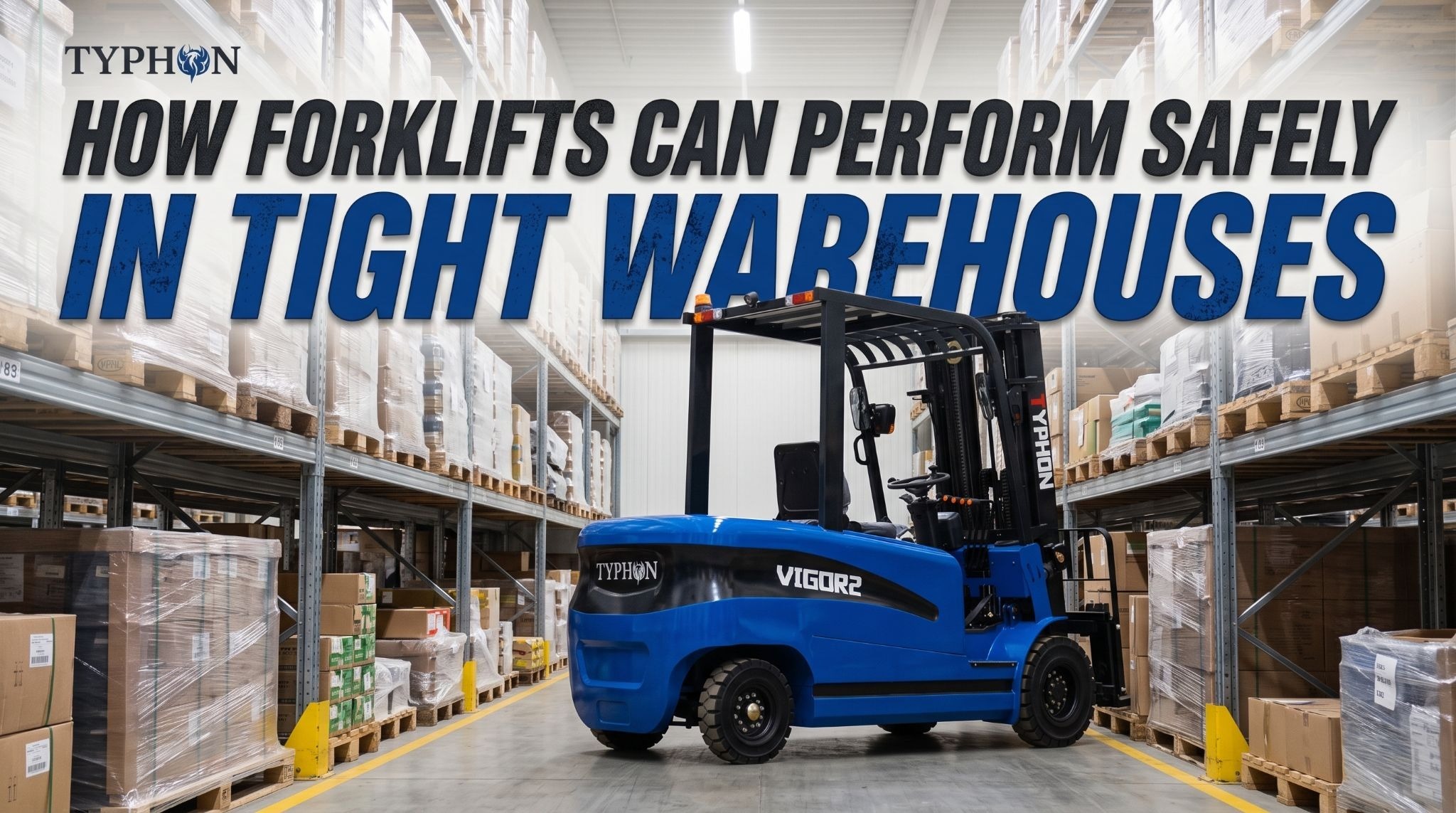
A warehouse team runs a busy afternoon shift in a facility where the racking climbs high and the aisles pinch narrow, barely wider than the forklift itself. Pallets stack three deep on either side, a picker moves on foot two rows over, and a delivery waits at the dock for the next load to clear. On a lesser setup, an operator would inch through the aisle nervously, clip a rack corner, or stall the whole flow while sorting out a tight turn. Instead, the operator on this floor reads the aisle at a glance, keeps the forks low, eases the truck into a clean pivot, and sets a loaded pallet onto a high beam without a wobble. The pick moves out, the dock fills, and nobody breaks stride. That smooth, safe performance in cramped quarters is no accident. It comes from the right machine, a disciplined routine, and an operator who knows exactly how to work the space.
Forklifts earn their keep in tight warehouses only when the machine, the layout, and the operator all pull in the same direction, because the same close quarters that maximize storage also magnify every mistake. Getting it right protects the people on the floor, the stock on the racks, and the equipment doing the lifting, while keeping the whole operation moving at a steady pace. This guide breaks down the six things that let a forklift perform safely in a tight warehouse:
- Choosing the right forklift for confined spaces
- The pre-shift inspection that starts every safe run
- Managing aisle and floor layout for safe movement
- Safe operating techniques in cramped quarters
- Handling loads carefully in narrow spaces
- Operator training and constant awareness
Here’s how each piece keeps the machine working safely in close quarters.
Picking a Machine Built for Close Quarters
Selection sets the ceiling on how safely any forklift can work in a cramped warehouse, since a truck too large for the aisles fights the space with every move. Narrow-aisle and stand-up reach trucks are built precisely for these conditions, offering a slim body and a tight turning radius that lets an operator maneuver where a standard counterbalance machine would jam. Matching the truck’s dimensions to your actual aisle widths and rack heights is the first decision that makes everything downstream possible.
Power type deserves close thought too, because it shapes both the air your crew breathes and how the machine fits the room. Electric forklifts run clean and quiet, which suits enclosed warehouses where exhaust would build up in tight, poorly ventilated spaces, and their compact battery packs often keep the overall footprint smaller. A machine that pollutes less and squeezes tighter simply belongs indoors more comfortably than a bulky combustion unit.
Lift height and capacity round out the fit, and honesty about your needs protects the whole operation. A truck sized to reach your top beam and carry your heaviest pallet, without straining at either limit, stays stable through the lifts a tight aisle demands, so choosing a machine with the right reach and rated load keeps performance steady rather than pushing equipment past its comfort zone. Key takeaway: pick a narrow-aisle, appropriately powered forklift sized to your aisles, rack heights, and load weights, so the machine fits the space instead of fighting it.
Inspecting the Truck Before the Shift Starts
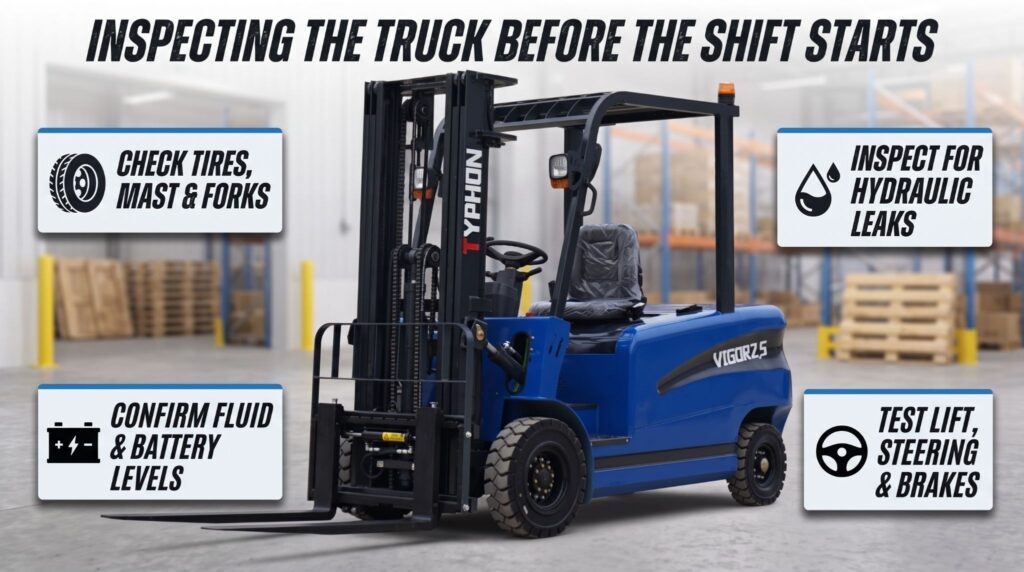
Every safe run opens with a walk-around check, because a fault caught in the staging area beats one discovered mid-aisle with a load in the air. Look over the tires for wear and damage, scan the mast and forks for cracks or bends, and confirm the hydraulic lines show no leaks or weeping seals. A quick glance at the fluid levels and the battery charge tells you whether the truck can carry a full shift without quitting halfway through.
Testing the controls comes next, while the machine still sits parked and any problem stays easy to manage. Run the lift and tilt functions through their range to feel that the mast moves smoothly and holds, check that the steering responds crisply in both directions, and confirm the brakes stop the truck firmly rather than sluggishly. Sound the horn, test the lights and any warning beacon, and make sure the seatbelt or operator restraint works as it should before you climb aboard for real.
Logging what you find turns a casual look into a genuine safety check the whole team can rely on. Note anything worn, loose, or leaking, tag a truck out of service for any fault that could fail under load, and report the smaller issues so they get fixed before they grow. What this means: a thorough pre-shift inspection of the tires, mast, controls, and brakes confirms the forklift is sound, so you enter a tight aisle trusting the machine instead of hoping.
Managing the Aisles and the Floor Beneath
Layout decides how safely traffic flows through a tight warehouse long before an operator ever touches the controls, so the floor plan deserves real attention. Aisles need enough width for the specific trucks running them, with clear markings that define travel lanes, pedestrian paths, and the zones where forklifts and people must not mix. Well-drawn lines and posted signs turn a crowded floor into an organized one where everyone knows where they belong.
Keeping those aisles clear is the discipline that makes the layout actually work day to day. Stray pallets, shrink wrap, spilled product, and parked equipment all shrink an already tight passage and force risky maneuvers, so a habit of clearing obstructions the moment they appear keeps the paths open and predictable. A clean aisle lets an operator focus on the load and the turn rather than dodging clutter that should not be there.
Blind corners and shared crossings call for engineered safeguards, because tight warehouses hide sightlines that open floors would reveal. Convex mirrors at intersections, warning signs at high-traffic junctions, and designated crossing points let operators and pedestrians anticipate one another before they meet, while good lighting removes the shadows that swallow a person or a pallet. Key takeaway: clear markings, obstruction-free aisles, and safeguards at blind corners organize the floor so forklifts and people move through tight space without surprising one another.
Operating Techniques That Suit Cramped Spaces
Speed is the first thing a smart operator surrenders in a tight warehouse, because the room to recover from a mistake simply is not there. Travel at a controlled, deliberate pace that lets you stop well within the space ahead, slow further as you approach corners and intersections, and never let momentum build to a point where a sudden obstacle leaves no safe out. A measured pace feels slower but moves stock faster over a shift by avoiding the incidents that halt everything.
Turning and maneuvering in close quarters reward smooth, planned inputs over sharp, reactive ones. Take corners wide enough to keep the load and the counterweight clear of the racking, use the truck’s tight turning radius deliberately rather than yanking the wheel, and pause to reposition when a single clean move will not clear the space. Sounding the horn before a blind corner or a crossing warns anyone nearby that the truck is coming through.
Visibility guides every one of these techniques, so keep a clear line to your path at all times. Travel with the forks low to see over them, turn the truck to face the direction of travel when a raised load blocks your view, and look toward where you are heading rather than trusting the mirror alone. What this means: slow, controlled speed, smooth planned turns, and a constant clear sightline let an operator work a tight warehouse safely without clipping racks, loads, or people.
Handling Loads Where Space Is Scarce
Stability governs load handling in narrow aisles, because a poorly managed pallet threatens the racks, the stock, and the operator all at once. Keep each load within the truck’s rated capacity, center it squarely on both forks, and confirm it sits stable before you lift, since an overloaded or lopsided pallet shifts the machine’s balance and invites a tip in a space that offers no cushion. A load handled within limits stays predictable through every lift and turn.
Carrying the load correctly protects your control and your view as you move it through the aisle. Travel with the forks just off the floor and the mast tilted back slightly to cradle the pallet, which keeps the center of gravity low and the load secure against the backrest, so the truck stays planted through turns and stops. Raising a load only when you reach the rack, rather than carrying it high across the floor, keeps the machine stable where stability matters most.
Placing and retrieving at height demands patience and precision in a tight aisle, where a rushed move courts real damage. Square the truck to the rack before lifting, raise the load smoothly to the beam, and ease the pallet into place without jarring the racking, then lower the forks fully before backing away. Key takeaway: keep loads within capacity, carry them low and tilted back, and place them at height with slow precision, so the forklift handles stock safely in space that punishes any wobble.
Training Operators and Keeping Them Aware
Competence is the foundation beneath every safe move in a tight warehouse, since the best machine and layout still depend on the person at the controls. Operators need proper certification and hands-on training specific to the trucks they run and the narrow conditions they face, so they understand the machine’s limits, the site’s hazards, and the techniques that cramped aisles demand. A well-trained operator reads a tight space and works it confidently rather than guessing through it.
Regular refresher training keeps operators familiar with safe driving practices and helps them respond confidently to changing warehouse conditions. Operators should also understand the differences between electric and diesel models, including how each handles, performs, and requires maintenance in daily operations.
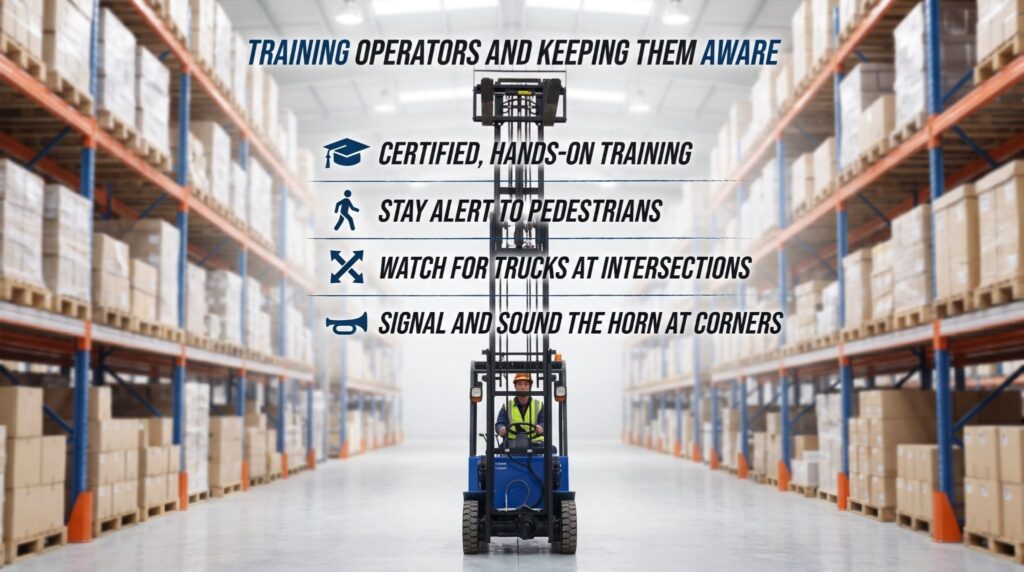
Awareness carries that training into every hour of the shift, because a moment of distraction in close quarters costs more than it would on an open floor. Staying alert to pedestrians, watching for other trucks at intersections, and constantly scanning the changing space around the machine let an operator anticipate trouble before it arrives. Communication reinforces that vigilance, whether through eye contact with a picker, a sounded horn at a corner, or a clear signal to a coworker sharing the aisle.
Ongoing reinforcement keeps skills sharp and habits honest long after the initial certification. Regular refresher training, honest feedback on close calls, and a culture that treats near misses as lessons rather than embarrassments all keep operators careful season after season, so safety stays a living practice instead of a one-time checkbox. What this means: certified training, constant awareness, and ongoing reinforcement put a skilled, alert operator at the controls, which is the single greatest safeguard in a tight warehouse.
Conclusion
A forklift performs safely in a tight warehouse when the machine, the space, and the operator all work together, and the whole picture comes into focus once you follow it in order. Start by choosing a narrow-aisle truck sized to your aisles, rack heights, and loads so the machine fits the space instead of fighting it, then open every shift with a thorough inspection of the tires, mast, controls, and brakes. Organize the floor with clear markings, obstruction-free aisles, and safeguards at blind corners so traffic moves without surprises, and operate with slow, controlled speed, smooth turns, and a constant clear sightline. Handle loads within capacity, carried low and placed at height with real precision, and back it all with certified, well-trained operators who stay alert and keep learning. Follow that sequence, and a cramped warehouse runs smoothly and safely rather than lurching from one close call to the next. Before your next shift, confirm your trucks match your aisle widths, run the pre-shift checks, and review your floor layout and training records so every load moves safely from dock to beam. When you’re ready to put a dependable, well-suited forklift to work, or need help matching the right machine to your warehouse, reach out to a trusted equipment specialist who can match reliable equipment to the results your operation depends on.
Frequently Asked Questions
What kind of forklift works best in a tight warehouse?
Narrow-aisle and stand-up reach trucks are the top choices, offering a slim body and tight turning radius that standard counterbalance machines cannot match. Electric models work best indoors, running clean and quiet without exhaust buildup. Most importantly, match the truck’s dimensions, lift height, and capacity to your actual aisle widths, rack heights, and load weights so the machine fits the space instead of fighting it.
How can I reduce the risk of accidents in narrow aisles?
Mark clear travel lanes, pedestrian paths, and forklift zones, keep aisles free of clutter, and add convex mirrors and good lighting at blind corners. On the truck, travel at a controlled pace, slow at corners, take turns wide enough to keep the load clear of the racking, and sound the horn before blind junctions. Keep the forks low for a clear sightline, and a well-organized floor with disciplined operating habits removes most of the risk tight aisles create.
Do operators need special training for tight warehouse conditions?
Yes, proper certification and hands-on training are required for both safety and regulatory compliance. Operators must understand the machine’s limits, site hazards, and the techniques narrow aisles demand, including how to inspect the truck, judge load stability, and communicate with others on the floor. Reinforce that training over time through refreshers and honest feedback on close calls, since a skilled, alert operator is the single greatest safeguard in a tight warehouse.