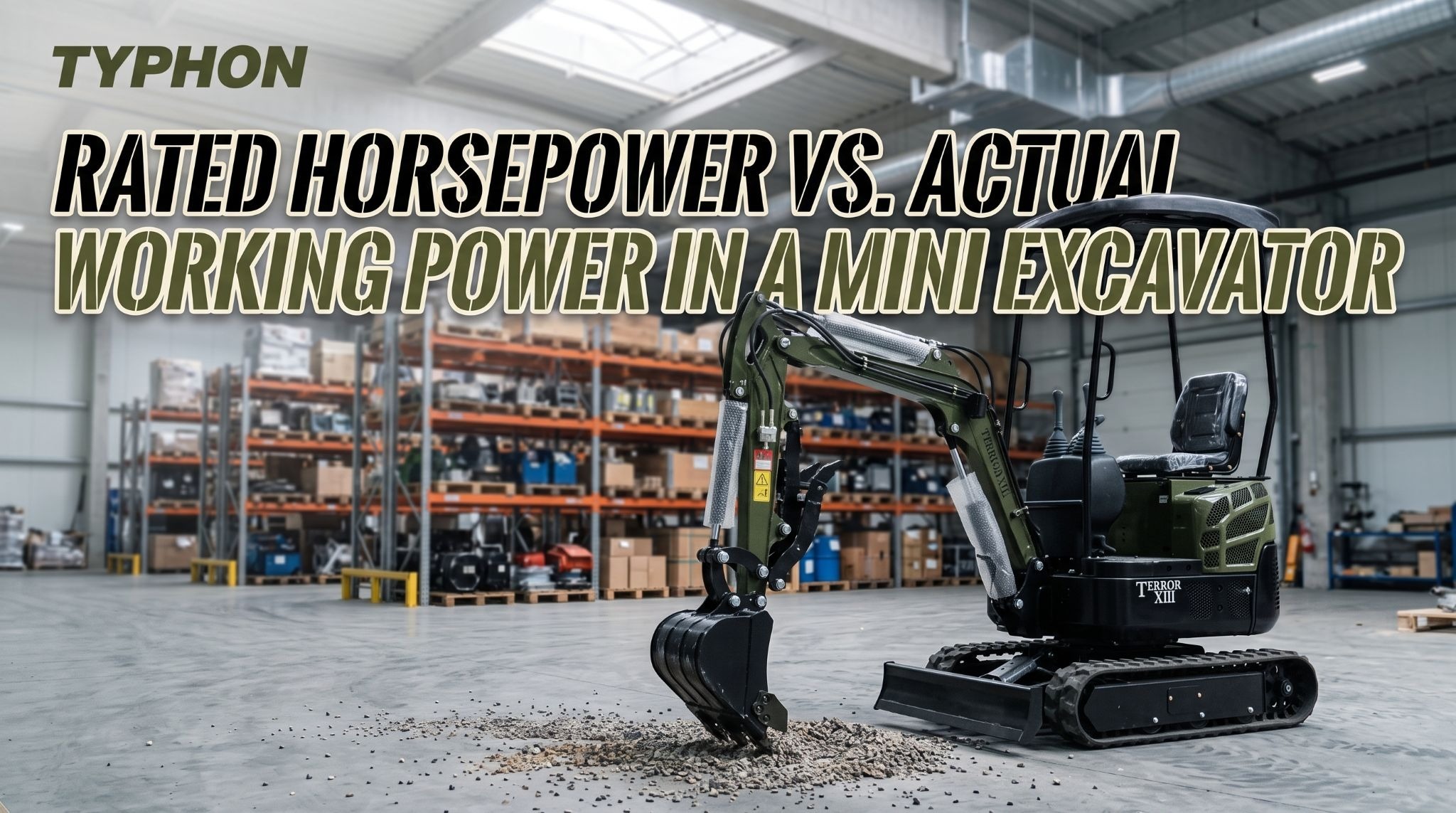
Rated horsepower does not tell the full story of mini excavator digging performance. Two machines can use engines with the same horsepower rating yet produce noticeably different trenching results because engine output must pass through the hydraulic pump, drive system, and other components before reaching the bucket. A higher rated horsepower figure may look impressive on a specification sheet, but it does not automatically mean more usable digging power at the attachment.
Actual working performance depends on how efficiently the machine converts engine output into hydraulic and mechanical work. Pump efficiency, hydraulic flow, system pressure, engine loading, and power losses all influence how much force and speed reach the excavator’s working equipment. Looking beyond rated horsepower helps buyers compare machines based on the power they can actually use during digging, lifting, and continuous excavation rather than relying on an engine number alone.
What Rated Horsepower Actually Means
Rated horsepower is a laboratory figure. It measures the maximum power an engine produces on a test stand under controlled, repeatable conditions, with the engine turning at a specified speed and running clean, fresh fuel. Manufacturers report it so buyers have a common reference point, but that reference reflects a bench, not a dig face.
The number usually follows a recognized standard, most often from SAE or ISO. These bodies define exactly how the test is run: the ambient temperature, the barometric pressure, the fuel grade, and which accessories are attached during measurement. SAE gross power, for instance, is measured with parasitic loads stripped away, while SAE net power keeps certain systems connected. ISO standards apply their own reference conditions. The differences matter, because a gross figure will always read higher than a net figure for the very same engine.
This is the first trap for buyers. When two machines quote horsepower under different standards, you are not comparing equals. A number measured gross and a number measured net can look close on paper while describing engines that behave nothing alike in the field. Always confirm which standard produced the figure before you treat it as meaningful.
What Actual Working Power Really Is
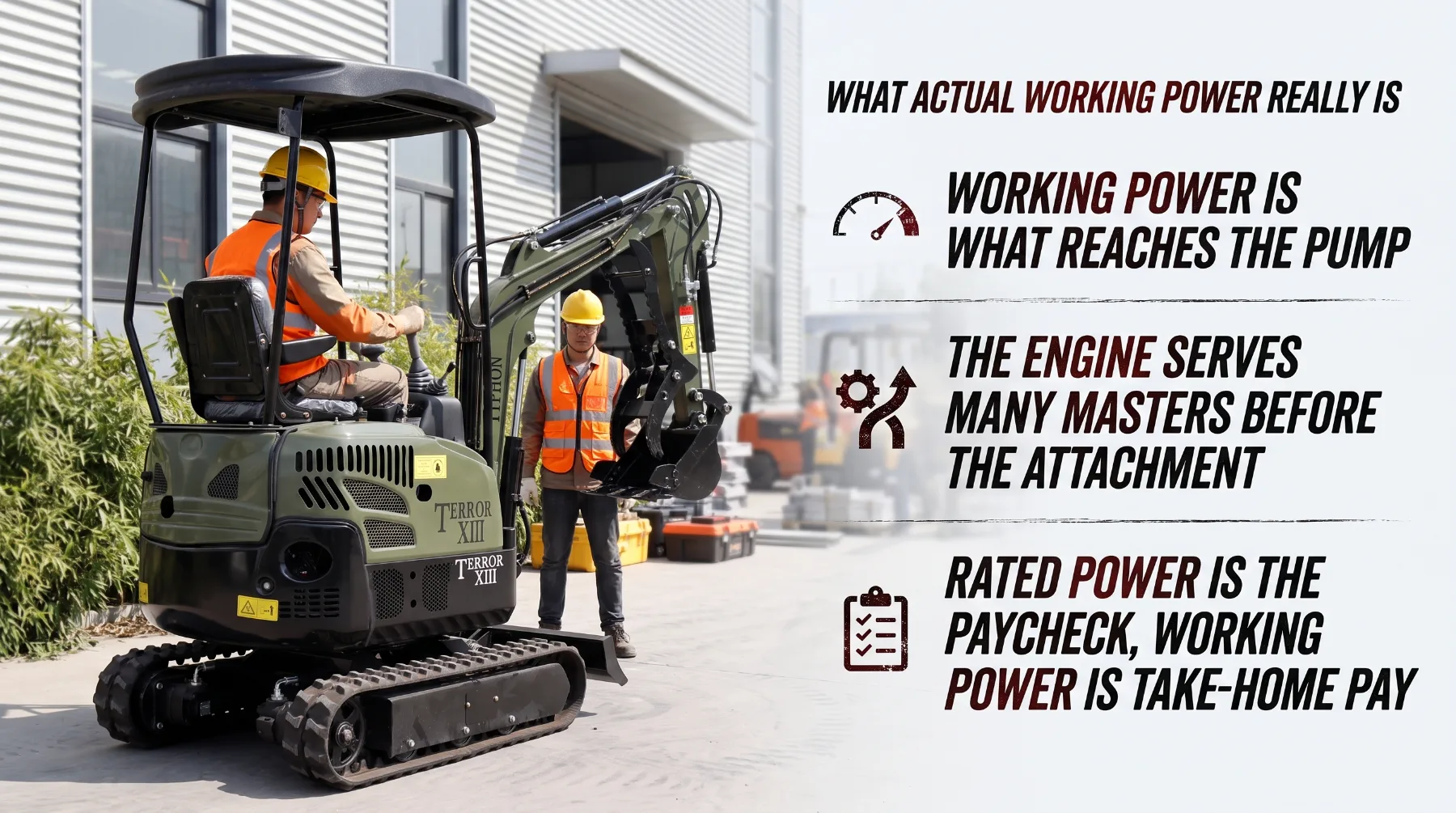
Actual working power is what remains after the engine finishes powering everything the machine needs just to run. It is the energy that actually reaches the hydraulic pump, drives the boom and bucket, and turns the material in front of you. This is the number you feel in the seat, and no spec sheet prints it directly.
The engine on a mini excavator serves many masters before it serves the attachment. Every one of those demands draws from the same output the rating measured in isolation. What looks like a fixed pool of power on paper becomes a divided one the moment the machine starts working.
Think of rated horsepower as a paycheck and working power as take-home pay. The gross figure tells you what the engine earns. The deductions come out before you ever see the balance, and those deductions are exactly where two similarly rated machines start to diverge.
Where the Power Goes Before It Reaches the Bucket
The largest deduction on most mini excavators is the hydraulic system itself. Pumps that pressurize oil for the boom, arm, bucket, swing, and travel motors absorb a substantial share of engine output. On a machine that is essentially a hydraulic tool on tracks, this draw is constant and significant, and it climbs sharply when you run demanding auxiliary attachments like a breaker or auger.
Cooling and charging take their cut too. The radiator fan spins off engine power, and it works harder as temperatures rise, pulling more energy exactly when the machine is already stressed. The alternator draws its share to keep the battery charged and the electronics alive. Add the water pump, oil pump, and other engine-driven accessories, and the parasitic load becomes a real, measurable portion of the total.
None of these systems is optional. They are the cost of keeping the machine alive and responsive, which is why net power ratings, measured with these loads connected, describe field behavior far more honestly than gross figures ever could. When you understand the drains, you understand why the bucket never sees the full rated number.
Why the Two Figures Diverge on a Real Jobsite
Laboratory conditions are generous. Real jobsites are not, and the gap between rated and working power widens under conditions the test cell never sees.
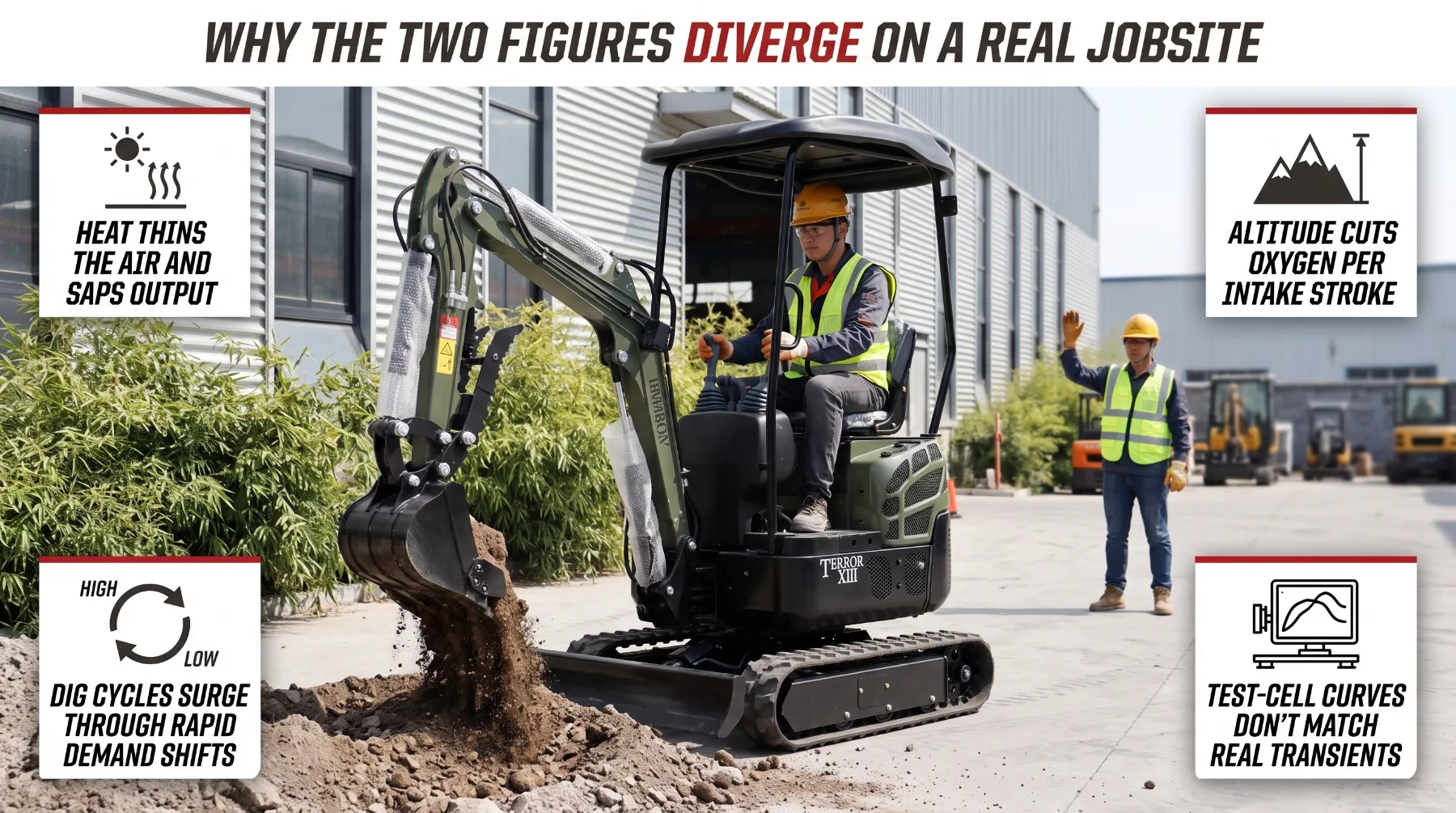
- Heat. Rating standards assume a moderate reference temperature. On a hot afternoon, intake air is thinner and less dense, the cooling fan works harder, and the engine loses output precisely when the crew needs it most.
- Altitude. Thinner air at elevation means less oxygen per intake stroke. A naturally aspirated engine can shed a noticeable slice of its rated power for every thousand feet above sea level.
- Load cycles. A dig cycle is not steady-state running. The engine surges through breakout, swing, and dump in rapid succession, and transient demands pull power differently than the smooth curve a dyno records.
Stack these factors together on a summer job at elevation, and the working power reaching your bucket can sit well below the confident figure printed in the brochure. This is not a defect. It is physics meeting marketing, and it explains why field performance so often falls short of expectations built on the rating alone.
What Happens When a Mini Excavator Is Underpowered
An underpowered machine reveals itself the moment the work turns serious. Push into hard-packed clay or rock, and the engine bogs, RPM sags, and the hydraulics slow because the pump can no longer get the energy it demands. Cycle times stretch, and a job that should take a morning drag into the afternoon.
The strain does not stay contained to the tachometer. An engine held near its limit runs hotter, burns more fuel for the work it completes, and pushes hydraulic oil past its efficient temperature range. Hot, thin oil lubricates poorly and accelerates wear on the pump and valves, so a machine chronically asked for more than it can give ages faster than its hours suggest.
Productivity suffers in a quieter way too. An operator fighting a struggling machine slows down, takes lighter bites, and works cautiously to avoid stalling. The output gap between an adequately powered excavator and an overtaxed one compounds across every cycle, every hour, and every shift, turning a modest specification shortfall into a real loss on the schedule.
How Buyers Should Compare Models
The right comparison reads both numbers together rather than fixating on the rating alone. Start by confirming that every machine on your list quotes horsepower under the same standard, net figures ideally, so you are weighing equals instead of a gross number against a net one.
From there, look past horsepower to the specifications that reveal working power. Hydraulic flow in gallons per minute and system pressure in psi tell you how much of the engine’s output the machine actually converts into digging force. A model with strong, well-matched hydraulics often out-digs one with a higher headline horsepower but a weaker pump. Breakout force and lift capacity translate the abstract power figure into the concrete performance you will feel.
Best of all, test the machine on material that resembles your real work. A demonstration in packed soil at a realistic dig depth tells you more in ten minutes than a spec sheet reveals in an hour. The excavator that holds its RPM and keeps its cycle brisk under genuine load is the one delivering its rated power where it counts.
Operator Tips for Maximizing Working Power
Even a well-matched machine performs better in disciplined hands. A few habits protect the power that reaches the bucket:
- Keep the cooling system clean. A radiator or oil cooler clogged with dust forces the fan and engine to work harder, stealing power and raising temperatures. Clear the fins regularly, especially in dusty conditions.
- Warm the hydraulics before hard work. Cold, thick oil moves sluggishly and strains the pump. Let the system reach operating temperature before demanding full breakout force.
- Match your dig to the machine. Taking a bite the excavator can complete without bogging keeps the engine in its efficient band and often clears more material per hour than forcing oversized cuts.
- Run auxiliary attachments within spec. Confirm that a breaker or auger’s flow demand sits within the machine’s rated auxiliary output, so the attachment and the digging functions are not starving each other.
- Service on schedule. Clean filters, fresh fuel, and healthy oil keep the engine producing close to its rated output rather than a degraded fraction of it.
Long-Term Durability Implications
The rated-versus-working gap shapes ownership costs long after the purchase. A machine sized correctly for its work runs within its comfortable range, so the engine, pump, and hydraulic oil all operate inside their design limits. Components reach closer to their full service life, and downtime stays rare.
The opposite pattern compounds quietly. An excavator routinely pushed past its practical output runs hot shift after shift, cooking its oil and stressing its pump and valves well beyond their intended duty. Wear accelerates, leaks arrive early, and repair bills climb, turning a cheap specification decision into an expensive maintenance habit.
Resale reflects the same discipline. A machine that was properly matched and well maintained shows less wear, holds its condition, and commands stronger buyer interest. Understanding working power is not only about a faster dig today. It is about protecting the investment across every season you own it.
Conclusion
Rated horsepower and actual working power are not the same, and the difference becomes important once a mini excavator is under real load. Rated horsepower shows what the engine can produce under controlled test conditions, while working power reflects how much of that output remains available after driving the hydraulic system, cooling system, pumps, and other machine functions. Focusing only on the rated figure can lead to a machine that loses RPM during digging, responds slowly under hydraulic demand, or consumes more fuel while trying to maintain performance. A better evaluation looks at the complete powertrain, including hydraulic flow, hydraulic pressure, engine response, and how efficiently power reaches the working attachment. When the available working power matches the job, the mini excavator can maintain stronger digging performance, smoother cycles, and more consistent output throughout demanding work.
Frequently Asked Questions
Why does my mini excavator feel weaker than its horsepower rating suggests?
The rating measures engine output on a test stand, but on the job the engine must first power the hydraulic pumps, cooling fan, alternator, and other accessories before any energy reaches the bucket. Heat, altitude, and the surging demands of a dig cycle widen the gap further. What you feel is the working power that remains after those deductions, which is always lower than the headline figure.
Is a higher horsepower number always the better choice?
Not on its own. Horsepower matters only alongside the specs that convert it into digging force, chiefly hydraulic flow, system pressure, breakout force, and lift capacity. A machine with a modest rating but strong, well-matched hydraulics often out-digs one with a bigger number and a weaker pump. Compare the full picture, and confirm both machines quote horsepower under the same standard.
How can I tell if a machine will hold its power under real conditions?
Test it on material close to your actual work, at a realistic dig depth, on a warm day if you can. Watch whether the engine holds its RPM under load and whether cycle times stay brisk as the digging turns hard. A machine that bogs, slows, or overheats during the demonstration will only do so more once it faces a full shift.