
A landscaping crew starts a full day of work on a commercial property with a compact tri-loader. The job includes moving mulch to planting beds, carrying pallets of pavers to a patio site, and clearing debris from a long row of overgrown shrubs. By midmorning, the machine had run steadily through dozens of loading cycles. In the early afternoon, the operator notices that lifting feels slower and the engine sounds strained on climbs. A quick stop shows dried grass clippings packed across the engine’s cooling intake and a dusty air filter. After the machine cools and is shut down, he cleans the intake and taps out the filter element. The tri-loader finishes the day with full power. The engine never lacked capability. It simply needed clean air and unrestricted cooling to deliver it.
Compact tri-loaders need a dependable power source for travel, lifting, and hydraulic attachment work. The Honda GX690 is a gasoline V-twin engine built for equipment applications that require strong output in a compact package. Evaluating its performance in a tri-loader means looking beyond the horsepower rating. Fuel delivery, cooling, maintenance, hydraulic demand, and overall machine design all shape how effectively the engine supports daily material handling.
V-Twin Configuration and Power Delivery
A V-twin engine arranges its two cylinders in a V shape around a shared crankshaft. That layout keeps the engine compact in both length and height while still providing substantial displacement. For a tri-loader, where the engine must fit within a tight chassis alongside the hydraulic pump, fuel tank, and cooling components, compact packaging is a real advantage.
The configuration also shapes how power reaches the machine. Two cylinders firing in sequence deliver smoother output than a single cylinder of similar size. That reduces vibration, which benefits both the operator and the machine’s components over long shifts. Smoother torque delivery also helps the engine hold its speed when hydraulic demand rises suddenly, such as when the bucket meets a dense pile.
The GX690 uses an overhead valve design, which supports efficient combustion and dependable starting. Its air-cooled construction removes the need for a radiator and coolant system, simplifying the machine’s layout and maintenance. These features explain why manufacturers choose V-twin gasoline engines for compact equipment that needs reliable power without added complexity.
Engine design is only part of the picture. Actual machine performance depends on how the tri-loader’s drivetrain and hydraulic system use the engine’s output. A well-matched pump, efficient valves, and properly sized cylinders turn engine power into productive work. A poorly matched system can waste it.
Key takeaway: The V-twin layout provides compact packaging, smooth power delivery, and reduced vibration, but real-world performance depends on how well the tri-loader’s drivetrain and hydraulic system use that power.
Rated Horsepower and Operating Speed
Horsepower ratings appear on nearly every equipment specification sheet, and they’re often the first figure buyers compare. The GX690’s rating in the TYPHON MZVT specification is stated at a defined engine speed. That figure describes output under the stated rating conditions. It doesn’t represent power continuously available at every machine function or under every operating condition.
Engine output changes with speed, load, temperature, altitude, and engine condition. Most equipment engines produce their rated horsepower near their governed maximum speed, while peak torque usually occurs at a somewhat lower speed. Torque matters greatly in a tri-loader, since it helps the engine resist slowing when the hydraulic pump draws heavy power during lifting or digging. Hot weather and high elevations reduce available output because thinner air limits combustion.
The engine’s governor keeps speed steady as load changes. When the operator lifts a heavy bucket, the governor opens the throttle to hold engine speed. A properly adjusted governor helps the hydraulic system receive consistent flow. A governor or throttle linkage that’s out of adjustment can cause hunting, slow response, or reduced power under load. Adjustments should be made only by qualified technicians following the manufacturer’s procedure.
Buyers should evaluate how the complete tri-loader uses its engine’s power. Consider lift capacity, travel speed, hydraulic flow, and attachment compatibility alongside the horsepower figure. A machine with a well-designed hydraulic system can outperform one with a higher rating but poorer engineering.
Key takeaway: Rated horsepower describes output under specific test conditions, so evaluate torque, governor behavior, operating environment, and the complete machine rather than treating the rating as a measure of working capability.
Engine Output During Hydraulic Work
Most of a tri-loader’s work happens through its hydraulic system. The engine drives a hydraulic pump, which converts mechanical power into oil flow and pressure. Control valves then direct that oil to the lift cylinders, tilt cylinders, drive motors, and any auxiliary attachment. Every movement the operator makes adds load to the engine through the pump.
Demand changes constantly during a typical shift. Driving with an empty bucket places a light load on the engine. Lifting a full bucket of wet soil while traveling uphill can place it near its limit. Running a continuous-flow attachment, such as an auger or trencher, keeps demand high for extended periods. The engine and pump must be matched so the engine can support combined hydraulic demand without stalling or lugging.
Operator technique has a direct effect on engine load. Smooth, progressive control inputs let the engine and governor respond gradually. Holding a hydraulic function against its stop forces oil over the relief valve. That turns engine power into heat without doing useful work and raises fuel consumption. Forcing the bucket into material beyond the machine’s capability can drag engine speed down and strain components.
Signs of an engine working too hard include heavy speed drops, black or unusual exhaust, knocking, and sluggish hydraulic response. When these appear, reduce load and let the machine recover. Repeated stalling or major power loss should be reported for inspection rather than treated as normal behavior.
Key takeaway: Hydraulic demand drives engine load, so use smooth control inputs, avoid holding functions at relief, and report repeated stalling or power loss rather than pushing the machine harder.
Cooling and Airflow Requirements
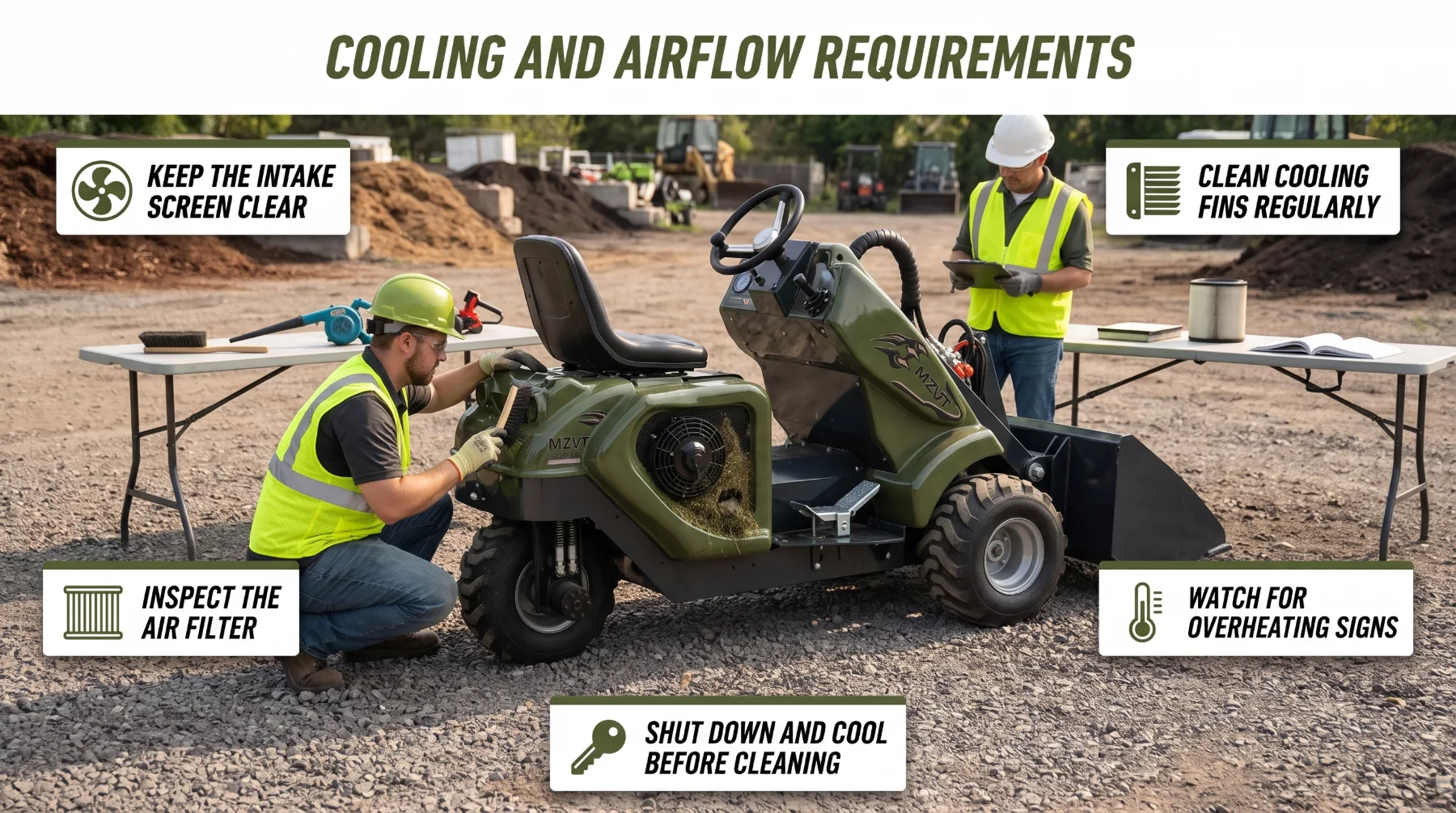
Air-cooled engines depend on a steady flow of air across their cylinder fins to control operating temperature. A flywheel fan draws air through an intake screen and directs it across the cylinders and heads. Anything that blocks that path reduces cooling capacity and allows temperature to rise.
Landscaping and material handling work exposes engines to cooling hazards all day. Grass clippings, leaves, mulch fibers, dust, and chaff collect on intake screens and between cylinder fins. Oil or fuel residue on the engine can trap that debris and build a thick layer quickly. Once airflow drops, the engine runs hotter, loses power, and wears faster.
Overheating causes damage that builds over time. High temperatures thin engine oil, reducing its protective film. Valves, pistons, and cylinder walls experience added stress, and repeated overheating can lead to scoring or warping. Many operators notice reduced power or rough running before more serious damage appears.
Regular cleaning keeps the cooling system effective. Inspect the intake screen at the start of every shift and during the day in debris-heavy conditions. Clean cooling fins and shrouds at the intervals the manual specifies, and more often in dusty or grassy environments. Always shut down the engine, remove the key, and allow it to cool before cleaning. Never remove cooling shrouds or guards during operation, and keep the area around the engine compartment clear of stored materials.
Key takeaway: Air-cooled engines need unobstructed airflow, so inspect the intake screen every shift, clean fins and shrouds regularly, and always shut down and cool the engine before cleaning.
Fuel Supply and Operating Runtime
Fuel consumption varies with engine load, operating speed, maintenance condition, and the amount of time spent on hydraulic work. A tri-loader moving heavy aggregate uphill all day uses fuel differently from one carrying light mulch across flat ground. Idle time, ambient temperature, and attachment use also affect how long a tank lasts.
Estimating runtime works best when based on real conditions. Track fuel used across several typical shifts and compare it with the type of work performed. Those records give a far more accurate picture than general estimates. They also reveal changes over time, since rising fuel use often signals a dirty air filter, worn spark plugs, or another maintenance need.
Fuel quality directly affects engine performance. Use the fuel grade the engine manufacturer specifies, and buy it from a reliable source. Gasoline degrades during storage, especially when blended with ethanol, and stale fuel can leave varnish in the carburetor and fuel lines. Use a fuel stabilizer when the machine will sit unused, and follow the manufacturer’s storage procedure for extended downtime. Keep fuel containers clean, sealed, and clearly labeled.
Refueling demands care because gasoline vapors ignite easily. Shut down the engine and allow it to cool before refueling. Refuel outdoors on level ground, away from sparks, flames, and smoking. Avoid overfilling, wipe up spills immediately, and replace the fuel cap securely. Never run a gasoline engine indoors or in an enclosed space, since exhaust contains carbon monoxide, which can be deadly without warning.
Key takeaway: Track fuel use under real working conditions, use clean fuel of the specified grade, stabilize fuel before storage, and refuel only with the engine cool and shut down in a ventilated outdoor area.
Routine Service and Long-Term Reliability
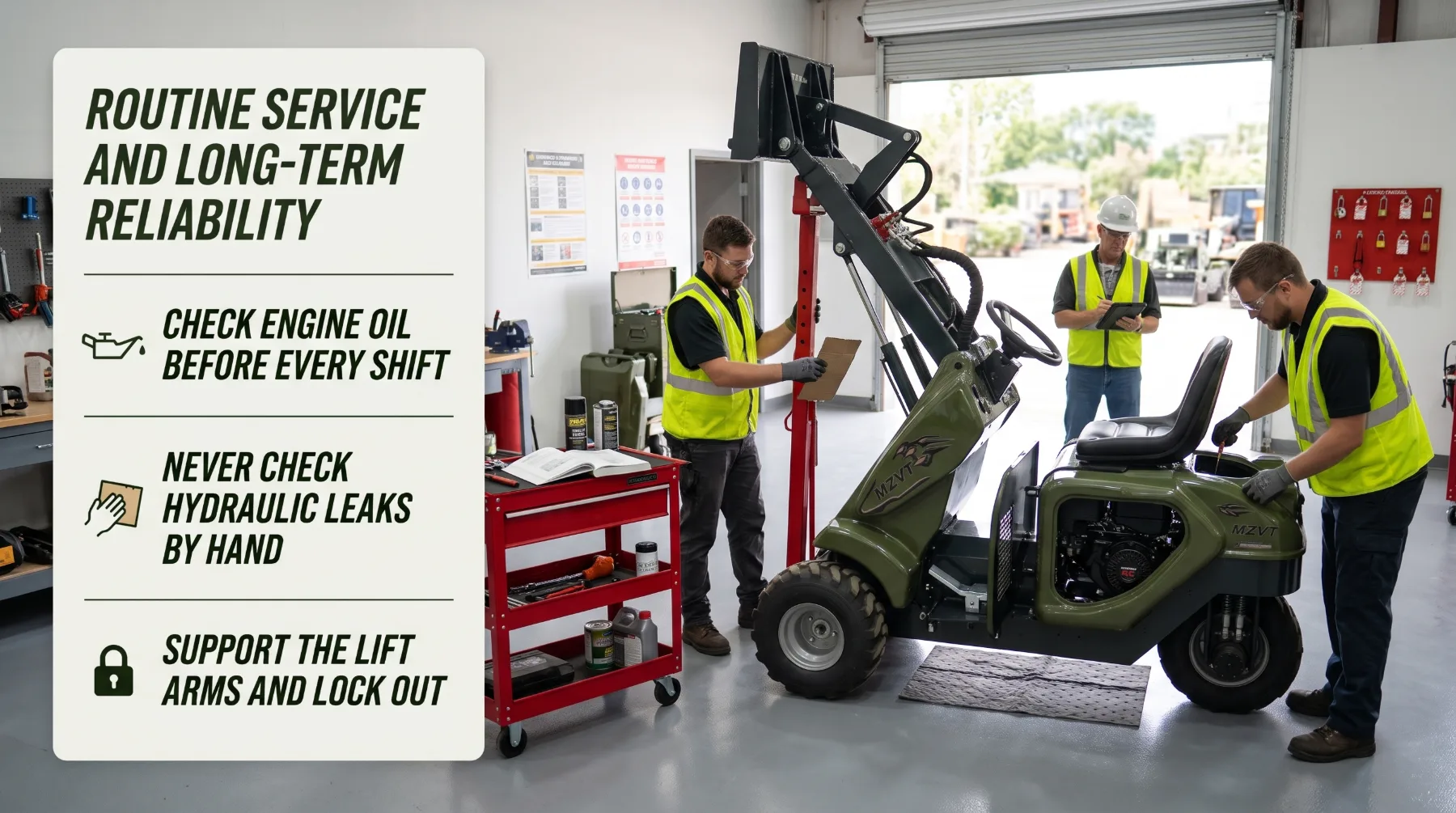
Consistent maintenance protects the GX690’s performance and extends its service life. Core tasks include checking and changing engine oil, inspecting and servicing the air filter, checking spark plugs, maintaining the fuel system, and cleaning cooling areas. Owners should follow Honda’s maintenance schedule for the specific engine version and shorten intervals in severe operating conditions.
Oil care comes first. Check the oil level before every shift with the machine on level ground, and use the oil type and viscosity the manual specifies. Change oil and filter at the recommended intervals, and more frequently in hot, dusty, or heavy-duty work. Low or degraded oil allows metal-to-metal contact that can damage an engine quickly.
Air filtration is equally important on compact loaders. A clogged filter restricts airflow, which reduces power and raises fuel use. A damaged or poorly sealed filter allows dust to reach the cylinders and accelerate wear. Inspect the filter elements regularly, service or replace them as the manual directs, and confirm the housing seals correctly after every service.
Safe service practice protects the technician as well as the machine. Before any inspection beyond the daily walk-around, lower the bucket or attachment to the ground, apply the parking brake, shut down the engine, and remove the key. Relieve hydraulic pressure as the manual directs, and apply a personal lock and tag according to site procedure. Never work beneath raised lift arms held only by hydraulics, and use the manufacturer’s approved support device when the arms must stay raised. Never use your hand to search for a hydraulic leak. Use cardboard or wood, wear gloves and eye protection, and seek immediate medical care if fluid penetrates the skin. Leave governor, carburetor, and internal engine repairs to qualified technicians using genuine parts.
Key takeaway: Follow Honda’s maintenance schedule, check oil daily, keep the air filter and cooling areas clean, and lower the attachment, lock out the machine, and check leaks with cardboard before any service.
Conclusion
The Honda GX690 gives the TYPHON MZVT compact tri-loader a dependable gasoline V-twin power source with compact packaging and smooth output. Its practical performance depends on far more than its horsepower rating. Hydraulic demand, operator technique, fuel quality, cooling airflow, and consistent maintenance all decide how much of that power turns into productive work. A clean, well-maintained engine paired with a well-matched hydraulic system delivers steady performance through demanding shifts.
Owners and operators get the most from their tri-loaders by evaluating the complete machine and protecting the engine every day. Build a daily routine around checking oil, cleaning the intake screen, and inspecting the air filter, then track fuel use to catch changes early. That simple habit keeps the GX690 running strong, reduces avoidable downtime, and helps every job finish on schedule.
Frequently Asked Questions
What horsepower is the Honda GX690 in the TYPHON MZVT specification?
The TYPHON MZVT specification lists the GX690’s rated horsepower at a defined engine speed. That rating reflects output under specific test conditions, so confirm the exact figures from the current specification sheet for your machine. Real working output varies with load, temperature, altitude, and engine condition.
Why is a V-twin engine used in compact equipment?
A V-twin arrangement places its cylinders in a compact V shape, which fits well within a tight equipment chassis. It delivers smoother power and less vibration than a single-cylinder engine of similar size. Its air-cooled design also simplifies maintenance by removing the need for a radiator and coolant system.
Does engine horsepower determine lifting capacity?
No. Lifting capacity depends on hydraulic pressure, cylinder dimensions, lift arm geometry, machine stability, and structural ratings. The engine supplies power to the hydraulic pump, but the rated operating capacity is set by the complete machine design. Always follow the tri-loader’s rated capacity rather than estimating from horsepower.
How can operators maintain GX690 performance?
Follow Honda’s service schedule for the specific engine version, check oil before every shift, and keep the air filter clean and properly sealed. Clean the intake screen and cooling fins regularly, especially in grassy or dusty conditions. Use fresh fuel of the specified grade, and report power loss, rough running, or overheating promptly.