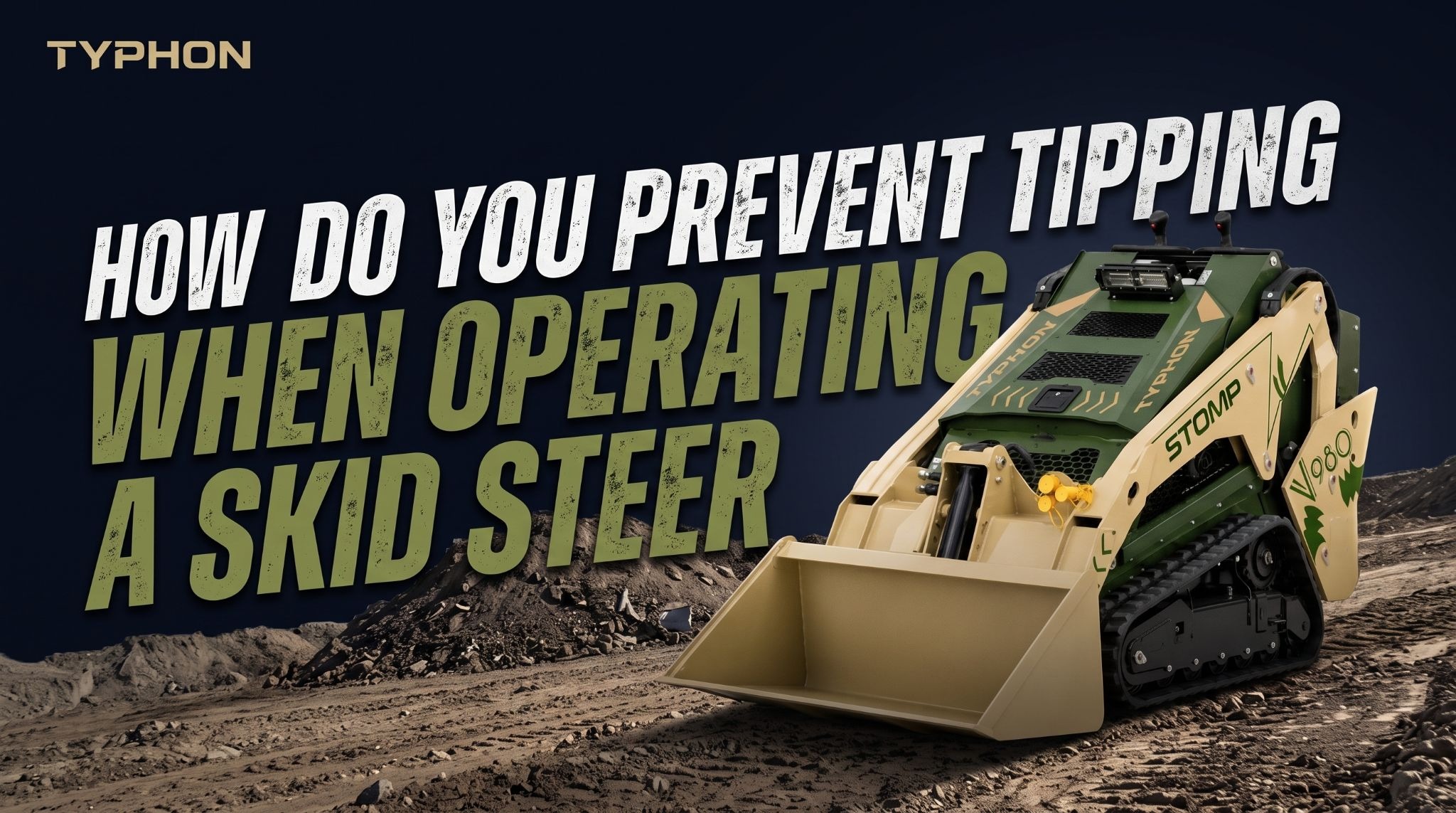
An operator on a grading job scoops a heavy bucket of wet fill, raises the arms high to clear a spoil pile, and swings the machine toward a gentle slope without slowing down. The skid steer’s rear end lightens, the tires on the downhill side dig in, and for one sickening second the whole machine rocks up onto two wheels before dropping back with a jolt that rattles his teeth. He got lucky. Plenty of operators in that exact moment don’t, and a tipped skid steer can crush an arm, roll onto a bystander, or total a machine in seconds. That near-miss is precisely why knowing how to keep the machine planted matters more than any production target on the schedule.
Keeping a machine upright comes down to understanding why it tips and building a handful of habits that counter it every time you climb in. This compact, powerful machine carries its weight and its load in ways that punish careless operation, yet nearly every rollover traces back to an avoidable choice. This guide covers why skid steers are prone to tipping, the load and bucket habits that keep them steady, terrain and slope awareness, speed and turning discipline, how attachments and counterweight factor in, and the safe practices that tie it all together. Here’s what every operator should know before the arms leave the ground.
Why These Machines Tip in the First Place
Design explains the vulnerability before any operator error enters the picture. A skid steer packs a lot of power into a short, narrow frame, which gives it a compact footprint and a relatively high center of gravity for its size. That stubby wheelbase makes the machine nimble in tight spaces, but it also leaves far less margin against tipping than a longer, wider machine would enjoy.
Load position shifts that balance fast, and it’s where trouble usually starts. Raising a loaded bucket lifts the machine’s center of gravity higher and pushes it forward, so a skid steer that feels rock-solid with the bucket low can turn dangerously top-heavy the moment those arms climb. The higher and heavier the load rides, the smaller the stable zone the operator has to work within.
Forward and sideways tipping are two separate risks worth naming. A skid steer pitches forward when a heavy raised load pulls its balance over the front axle, and it rolls sideways when a turn, a slope, or uneven ground shoves the weight past the narrow track. Recognizing that the machine tips in both directions, for different reasons, is the foundation every good habit below builds on.
Loading and Bucket Habits That Keep It Steady
Carrying the load low is the single most protective habit an operator can build, and it costs nothing but discipline. Keeping the bucket or attachment just off the ground while you travel holds the machine’s center of gravity down where it belongs, so the skid steer stays planted through bumps, turns, and quick stops. Raise the load only when you’re positioned to dump or place it, then lower it again before you move on.
Overfilling the bucket undoes that stability, so respect the rated capacity of every scoop. Cramming material past the brim pushes weight forward and up, strains the machine’s balance, and spills product that a full-but-level bucket would carry cleanly. A bucket loaded to its rating and no further keeps the weight where the machine can handle it.
Smooth control inputs round out safe loading. Jerking the arms up, slamming the bucket into a pile, or reversing hard with a raised load all send the machine’s balance lurching in ways that invite a tip. What this means: treat every lift and dump as a deliberate motion rather than a race, since sudden movements are exactly what turn a stable load into a rollover.
Reading the Ground Before You Commit
Terrain shapes stability more than any other outside factor, so scout the ground before you drive a loaded machine across it. Soft soil, mud, loose gravel, hidden holes, and debris all shift how the skid steer sits and how its tires grip, and a surface that looks solid can give way under a loaded machine. Walking a questionable area first beats discovering a soft spot with a full bucket raised.
Slopes demand the most respect, since a grade turns an ordinary maneuver into a tipping risk. Travel straight up and down a slope rather than across it, which keeps the machine’s weight aligned with its most stable axis instead of leaning it toward the downhill side. Driving with the heavy end pointed uphill, whether that’s the load on the way up or the load on the way down, keeps the center of gravity where it steadies the machine.
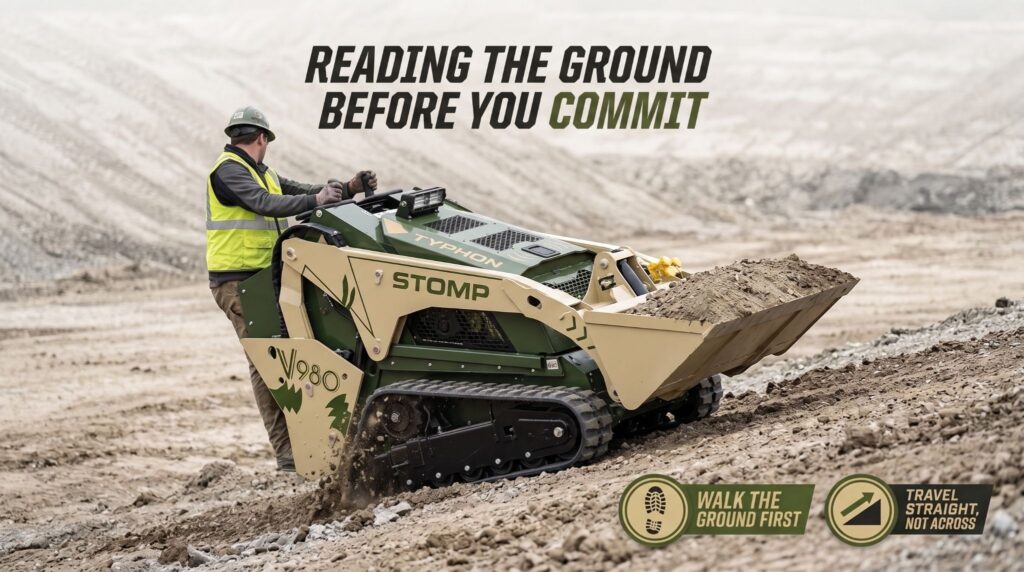
Edges and drop-offs deserve a wide berth that beginners often skimp on. Working too close to a trench, a loading dock, or the lip of an excavation risks the ground crumbling under the tires and pitching the machine over. What this means: give every edge more clearance than feels necessary, because the soil near a drop-off is the first to fail under a loaded skid steer.
Controlling Speed and Turning With Discipline
Speed multiplies every other tipping risk, so match your pace to the load and the ground. A skid steer moving fast carries momentum that resists direction changes, which means a quick turn or a sudden stop can throw the machine’s balance past its narrow track. Slowing down before you reach a turn, a slope, or a rough patch gives the machine time to stay settled under you.
Sharp turns are where sideways rollovers happen, especially with a raised or heavy load. Swinging hard while the bucket rides high shifts weight abruptly to the outside tires and lifts the inside ones, and on a slope that same turn can flip the machine outright. Keeping the load low through every turn and easing into the steering rather than snapping it holds the skid steer flat when a fast, high turn would upset it.
Consider a common scenario: an operator hauling a full bucket toward a truck decides to cut the corner tight to save a few seconds. Turning fast with the load up, he feels the inside wheels go light and has to straighten out fast to recover. What this means: the seconds saved by rushing a turn are never worth the rollover risk, so slow down, lower the load, and steer deliberately every time.
How Attachments and Counterweight Factor In
Attachments change the machine’s balance, so treat each one as a new stability equation rather than assuming the skid steer behaves the same. A heavy attachment mounted on the front, like a grapple, auger, or a large bucket, pushes the center of gravity forward and raises the odds of a forward tip, especially when raised. Confirm every attachment falls within the machine’s rated operating capacity before you put it to work.
Counterweight exists precisely to offset that forward load, and using it correctly keeps the machine balanced. Many skid steers accept rear counterweights that push the balance point back toward center, which lets the machine handle heavy front attachments without pitching forward. Check the manufacturer’s guidance on what counterweight suits your attachment, since running a heavy front tool without the recommended ballast leaves the machine dangerously nose-heavy.
Rated operating capacity is the number that ties attachments and stability together. This figure, set by the manufacturer, defines the maximum load the machine handles safely, and it accounts for the tipping point with a margin built in. What this means: staying within the rated operating capacity for your specific machine and attachment is the clearest line between safe work and a rollover, so know that number and respect it.
Safe Operating Practices That Tie It Together
Seatbelt and restraint use protect the operator when everything else fails, so buckle in every single time. A skid steer’s cab and rollover protection only shield you if you stay inside them, and the great majority of tipping fatalities involve operators thrown from or reaching out of the machine. Keeping your seatbelt fastened and your arms, legs, and head inside the cab is non-negotiable whenever the machine is running.
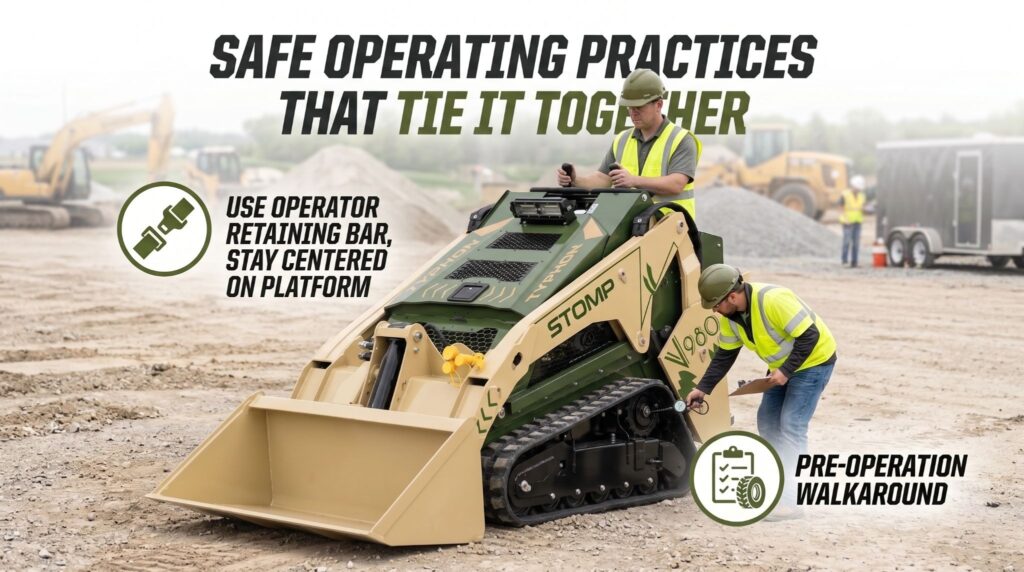
Pre-operation checks catch problems that quietly raise tipping risk. Confirming tire pressure and condition, testing the controls, and verifying the attachment is properly locked on all take minutes and prevent the surprises that upset a loaded machine mid-task. A quick walkaround before each shift spots trouble while it’s still cheap to fix.
Awareness and training pull the whole picture together on a busy site. Keep bystanders clear of the machine’s path and pinch points, avoid operating on unstable ground you haven’t checked, and never carry passengers, since a skid steer seats one operator for a reason. Training every operator to the same careful standard keeps one careless driver from rolling a machine the rest of the crew respects, and following a steady maintenance routine keeps the machine responding the way safe operation demands.
Conclusion
Preventing a skid steer rollover rests on a few dependable habits that counter the machine’s compact, top-heavy design. Carry loads low and within the rated capacity, read the ground before you commit to it, travel straight up and down slopes rather than across them, and slow down before every turn while keeping the load down through the steering. Match your attachments to the machine’s rated operating capacity, use the manufacturer’s recommended counterweight, and buckle your seatbelt with your body inside the cab every time you run it. Add a pre-operation walkaround and keep bystanders clear, and the machine stays planted through the work that would tip a careless operator. Respect the skid steer’s limits rather than testing them, and it rewards you with safe, productive work on every job. When you’re ready to put a dependable skid steer to work with operators trained to run it right, reach out to a trusted equipment specialist who can pair a reliable machine with the results your projects depend on.
Frequently Asked Questions
Why do skid steers tip over so easily?
A skid steer packs heavy power into a short, narrow frame, which gives it a compact footprint and a relatively high center of gravity. Raising a loaded bucket lifts and shifts that balance forward, so the machine can turn top-heavy fast. Most rollovers trace back to a raised or overloaded bucket, a sharp turn, a slope, or unstable ground rather than the machine itself failing.
What is the safest way to drive a skid steer on a slope?
Travel straight up and down the grade rather than across it, which keeps the machine’s weight aligned with its most stable axis instead of leaning it downhill. Keep the load low, point the heavy end uphill, move slowly, and avoid turning on the slope. Reading the ground for soft spots before you commit the machine keeps the tires gripping and the load steady.
Does a counterweight really help prevent tipping?
Yes, when it matches the machine and the attachment. A rear counterweight pushes the balance point back toward center, offsetting a heavy front attachment that would otherwise make the machine nose-heavy and prone to a forward tip. Check the manufacturer’s guidance for the right ballast, and always keep the total load within the machine’s rated operating capacity.