The machine you choose shapes far more than how you dig or lift. It decides which attachments you can run, how much work you finish in a day, and how efficiently you spend every dollar. Skid steer loaders and wheel loaders both serve as attachment platforms, but they were built for different kinds of work. Match the wrong platform to your attachments, and you either overpower a light task or undersize a heavy one.
This guide gives contractors, construction companies, landscapers, and equipment buyers a clear, practical comparison. By the end, you will understand how these two machines differ as attachment platforms, how their common attachments stack up, and how to choose the right machine-attachment combination for your work.
Understanding the Core Difference
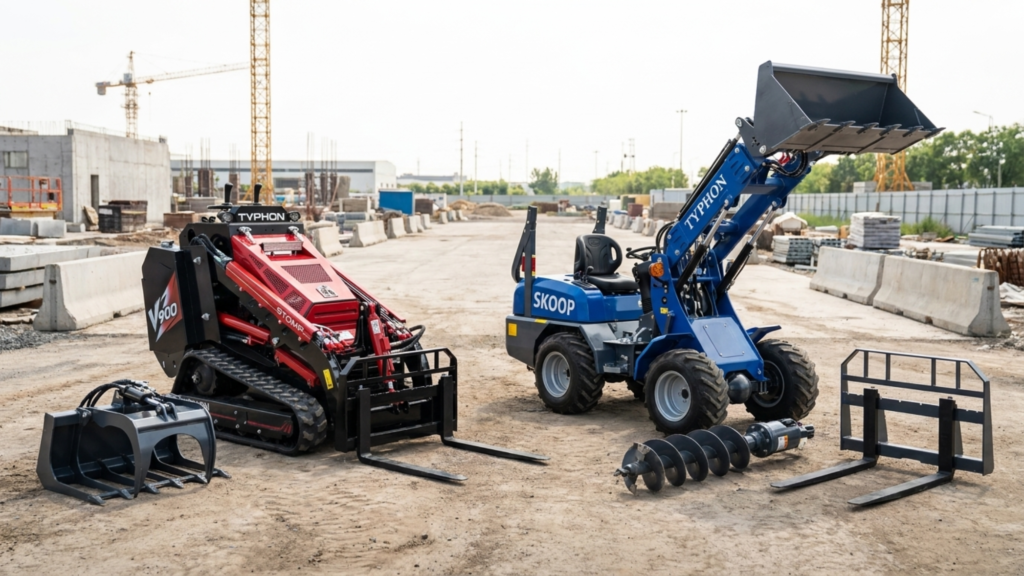
Both machines carry attachments at the front and swap tools to expand their capability. What separates them is scale, design, and the kind of work each was engineered to handle.
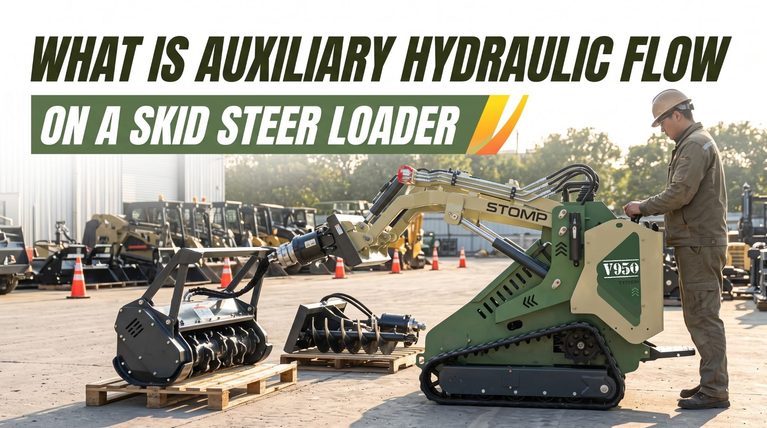
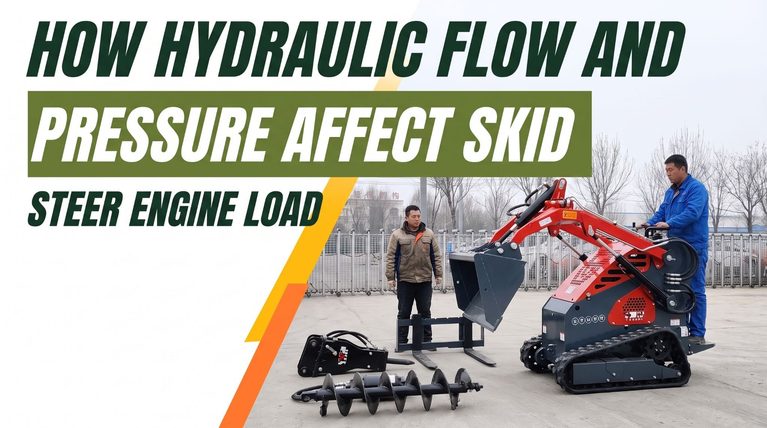
A skid steer loader is a compact, highly maneuverable machine that steers by driving its left and right sides at different speeds. That design lets it pivot within its own footprint and work in tight spaces. As an attachment platform, its strength is versatility and agility on confined sites.
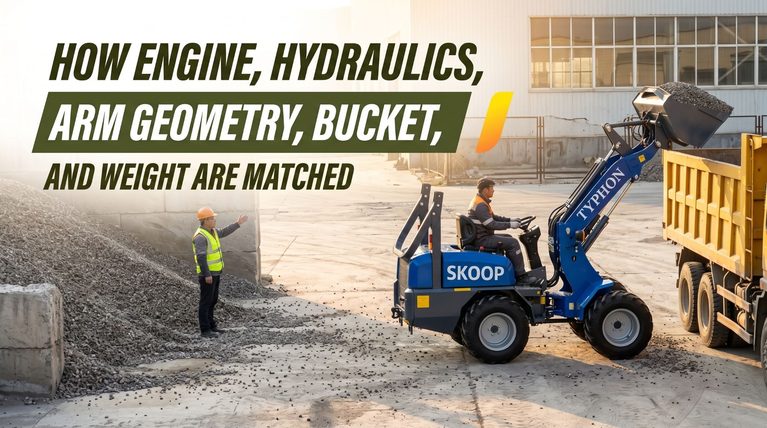
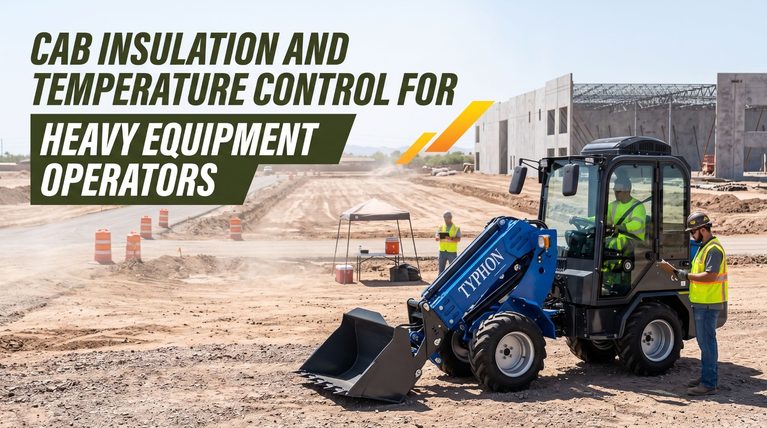
A wheel loader is a larger, articulated or rigid-frame machine built to move high volumes of material with a big front bucket. It offers greater lift capacity, reach, and travel speed. As an attachment platform, its strength is power and productivity on open ground.
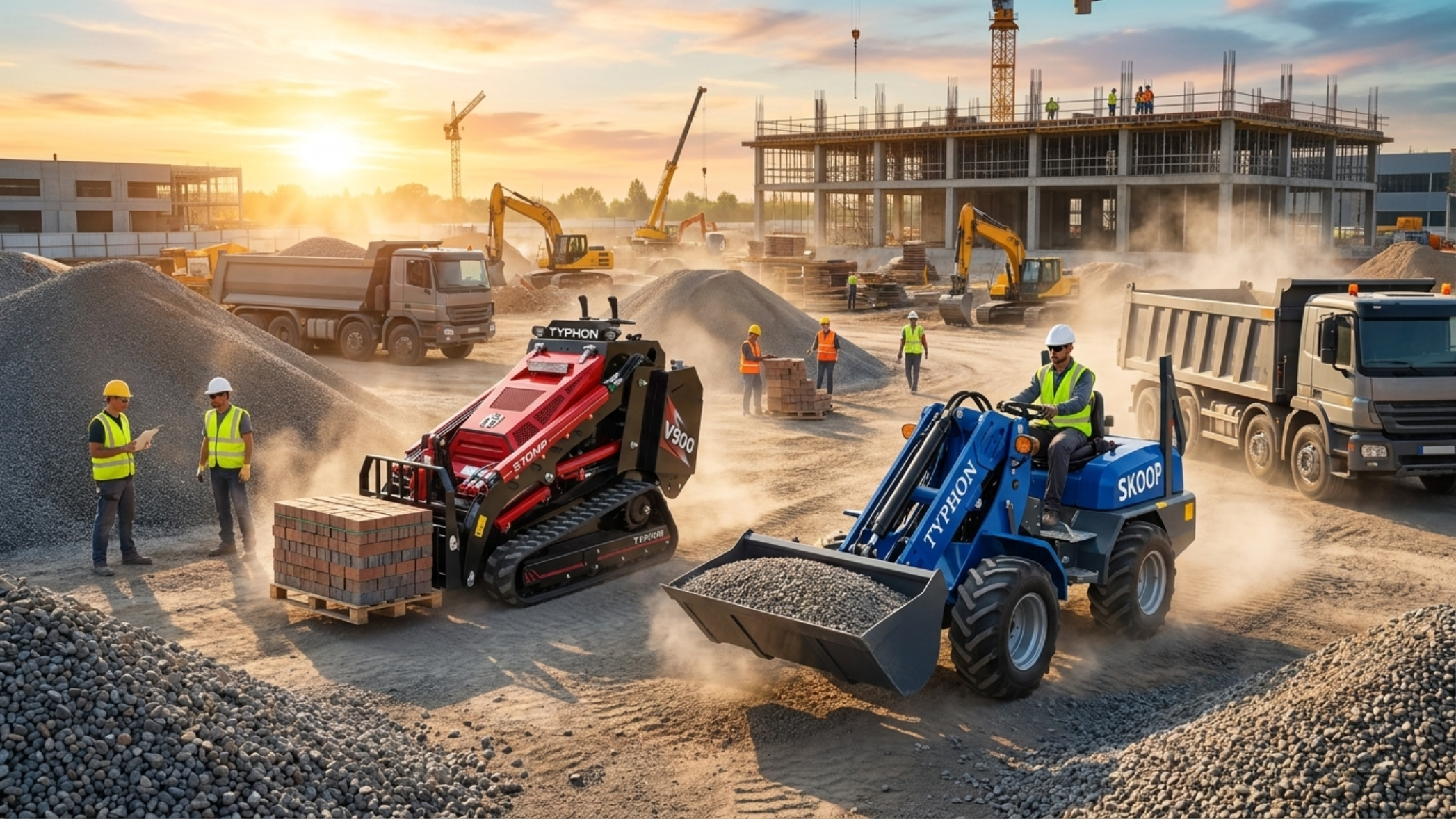
Keep that contrast in mind. The skid steer trades raw capacity for agility and tool variety, while the wheel loader trades compactness for lifting power and material volume.
Comparing Common Attachments
Both platforms run a wide range of tools, but the size and purpose of those tools differ significantly. Here is how the most common attachments compare across the two machines.
Buckets
Skid steer buckets are sized for grading, backfilling, and moving modest volumes in tight quarters. They handle dirt, gravel, and debris with precision on residential and confined sites.
Wheel loader buckets are far larger, built to scoop and carry high volumes of material quickly. They excel at loading trucks, moving aggregate, and clearing large stockpiles on open sites.
Grapples
Skid steer grapples grip logs, brush, rock, and debris in compact loads, making them ideal for land clearing and cleanup on smaller sites.
Wheel loader grapples handle heavier, bulkier material in larger volumes, suiting log yards, scrap operations, and high-volume material handling.
Augers
Skid steer augers bore clean holes for posts, piers, and footings with a range of bit sizes. Their precision and maneuverability make them a favorite for fencing and light construction.
Wheel loader augers exist but are less common, since the machine’s size makes it harder to position for precise, repetitive hole work.
Pallet Forks
Skid steer pallet forks move materials around tight sites and inside structures, handling pallets, block, and bundled supplies with ease.
Wheel loader pallet forks carry heavier loads over longer distances at higher travel speeds, making them well suited to large yards and busy supply operations.
Snow Pushers
Skid steer snow pushers clear sidewalks, driveways, and small lots where agility and tight turns matter most.
Wheel loader snow pushers clear large parking lots, roads, and commercial properties quickly, moving far more snow per pass.
Hydraulic Breakers
Skid steer breakers deliver controlled percussive force for demolition, concrete work, and light breaking in confined spaces.
Wheel loader breakers are less common, as most heavy breaking work goes to excavators, though larger loaders can run them for specific tasks.
Attachment Compatibility
Compatibility comes down to the coupler system and how easily tools swap between machines.
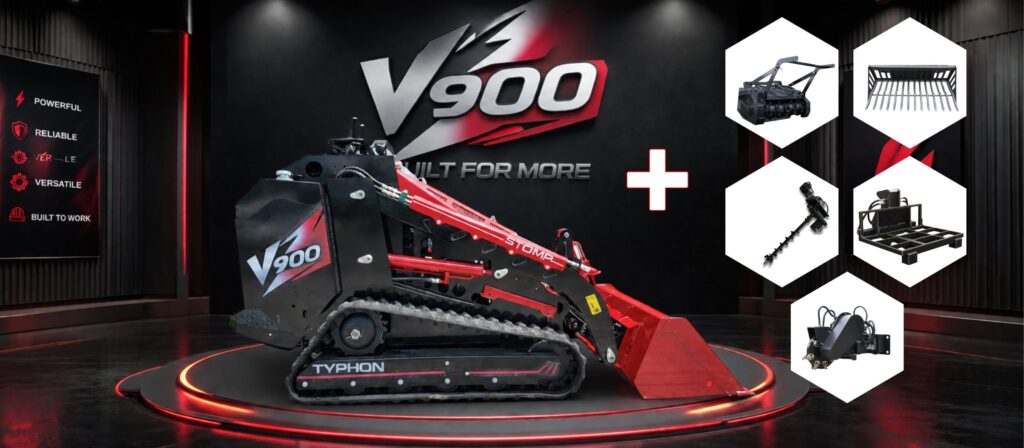
Skid steers use a widely standardized quick-attach plate, and that standard has become an industry benchmark. As a result, a vast ecosystem of attachments fits most skid steers, and many compact track loaders share the same interface. That broad compatibility gives skid steer owners an enormous range of tools to choose from.
Wheel loaders use their own coupler systems, which vary more by manufacturer and machine size. Attachment options exist in good numbers, but the ecosystem is narrower and the tools are larger, heavier, and costlier.
Takeaway: If tool variety and easy swapping matter most, the skid steer’s standardized system is hard to beat.
Hydraulic Performance
Hydraulics power every attachment, so flow and pressure determine what each machine can run.
Skid steers offer standard and high-flow hydraulic options, and high-flow models drive demanding tools like cold planers, mulchers, and large breakers effectively. Their auxiliary hydraulics are engineered specifically for running a wide range of powered attachments.
Wheel loaders deliver strong hydraulic power geared toward lifting and heavy bucket work. They handle large attachments well, but their hydraulic systems focus more on lift capacity and material volume than on the tool variety a skid steer supports.
Takeaway: For running many different powered attachments, verify high-flow capability on a skid steer. For heavy lifting and large tools, the wheel loader’s power fits.
Versatility
Versatility is where the skid steer truly stands out. Its standardized coupler, high-flow options, and compact size let a single machine run dozens of attachments across landscaping, construction, agriculture, and demolition. Operators swap tools in minutes, turning one machine into a fleet.
Wheel loaders are versatile too, but within a narrower band focused on material handling and loading. They shine when the work centers on moving high volumes rather than switching between many task types.
Takeaway: For varied, multi-task work, the skid steer offers unmatched flexibility. For high-volume loading, the wheel loader stays focused and productive.
Maneuverability
Skid steers excel in tight quarters. Their zero-radius turning lets operators pivot in place, work along walls, and thread through gates and doorways. On confined lots, interior spaces, and crowded sites, that agility translates into faster cycles and less repositioning.
Wheel loaders need more room to operate. Their larger frame and articulated steering require space to turn and travel, which is no obstacle on open sites but a real limitation in tight ones. In return, they travel faster over distance and carry more per trip.
Takeaway: For tight sites, the skid steer wins on access. For open ground and long hauls, the wheel loader moves material faster.
Operating Costs
Cost splits across purchase price, fuel, maintenance, and transport.
- Purchase price: Skid steers generally cost less to buy, while wheel loaders carry a higher price that scales with size and capacity.
- Fuel: The smaller skid steer typically burns less fuel per hour than the larger, more powerful wheel loader.
- Maintenance: Both are straightforward to service, though the wheel loader’s larger systems and components raise parts and upkeep costs.
- Transport: Skid steers load easily onto standard trailers, while wheel loaders often require heavier hauling equipment.
Takeaway: The skid steer usually wins on lower operating cost, but a wheel loader that moves far more material per hour can prove more economical on high-volume work.
Comparison Table
| Factor | Skid Steer Loader | Wheel Loader |
|---|---|---|
| Size | Compact, fits tight and interior spaces | Large, needs open room to operate |
| Maneuverability | Zero-radius turning, excellent in tight spots | Wider turning, needs space to travel |
| Attachment range | Very wide, standardized quick-attach | Good, narrower and manufacturer-specific |
| Attachment size | Smaller, precise tools | Larger, high-capacity tools |
| Hydraulic focus | Versatile tool operation, high-flow options | Lifting power and material volume |
| Lift capacity | Lower, sized for compact work | High, built for heavy loads |
| Material volume | Modest per cycle | High per cycle |
| Travel speed | Slower over distance | Faster over long hauls |
| Fuel use | Lower per hour | Higher per hour |
| Purchase cost | Lower | Higher |
| Transport | Standard trailer | Heavier hauling equipment |
| Best applications | Tight sites, varied tasks, tool versatility | Open sites, high-volume loading, heavy lifting |
How to Choose the Right Machine-Attachment Combo
Work through four questions honestly, and the right combination usually becomes clear.
1. What Are Your Jobsite Conditions?
Measure your typical access and space. Tight, confined, or interior sites point firmly to a skid steer. Open sites with room to maneuver and long travel distances favor a wheel loader.
2. What Attachments Will You Run Most?
If your work relies on frequent tool changes across many task types, the skid steer’s standardized system and versatility win. If you mainly run buckets and forks to move high volumes, the wheel loader’s capacity fits.
3. How Much Material Must You Move?
For light-to-moderate volumes and precision work, the skid steer is often enough. For high-volume loading, stockpiling, and truck loading, the wheel loader moves far more per hour.
4. What Is Your Budget and Utilization?
Weigh purchase, fuel, maintenance, and transport against your workload. A skid steer costs less to buy and run, while a wheel loader’s higher cost pays off when heavy, steady material handling is routine.
A Simple Recommendation Framework
Use this quick logic to reach a confident decision:
- Work mostly in tight or interior spaces? → Skid steer loader
- Handle many task types with frequent attachment changes? → Skid steer loader
- Move high volumes of material on open ground? → Wheel loader
- Need heavy lift capacity and fast travel? → Wheel loader
- Tightest budget with varied, light-to-moderate work? → Skid steer loader
When the answers pull in different directions, let your most frequent and most demanding work make the call. Many established operations eventually run both, deploying the skid steer for tight, varied tasks and the wheel loader for high-volume loading.
Conclusion
The choice between skid steer attachments and wheel loader attachments comes down to fit, not superiority. Skid steers win on tool versatility, maneuverability, and lower cost, making them ideal for tight sites and varied tasks. Wheel loaders win on lift capacity, material volume, and travel speed, making them the right call for high-volume loading on open ground. Every other difference flows from that core distinction in scale and design.
Your next step is straightforward. Assess your jobsite conditions, define the attachments you will run most, weigh your material volume against your budget, and match the platform to the work. With those facts in hand, talk with a knowledgeable equipment partner who understands your operation, and you will invest with confidence in a machine-attachment combination that delivers dependable value on every job. Reach out today for expert guidance and a quote you can count on.