Switching from bucket work to a trencher can change the demands placed on a skid steer in an instant. The attachment may connect properly and the hydraulic lines may couple without trouble, yet the trencher can still run sluggishly once cutting begins. In many cases, the issue is not the attachment itself but a mismatch between the tool’s hydraulic requirements and the auxiliary flow the machine can provide.
Auxiliary hydraulics allow a skid steer to power a wide range of attachments that rely on hydraulic motors or cylinders. Flow rate determines how much hydraulic fluid reaches the attachment, while pressure provides the force needed to perform the work. Attachments such as trenchers, augers, sweepers, and certain cutters can each require different combinations of flow and pressure to operate effectively.
Matching the attachment to the machine’s hydraulic capability helps maintain consistent performance. Checking the required flow range, pressure rating, and connection specifications before switching tools can prevent slow operation and unnecessary strain on the hydraulic system. When the machine and attachment are properly matched, the skid steer can make better use of its attachment range throughout the workday.
Auxiliary Hydraulics Power Attachments
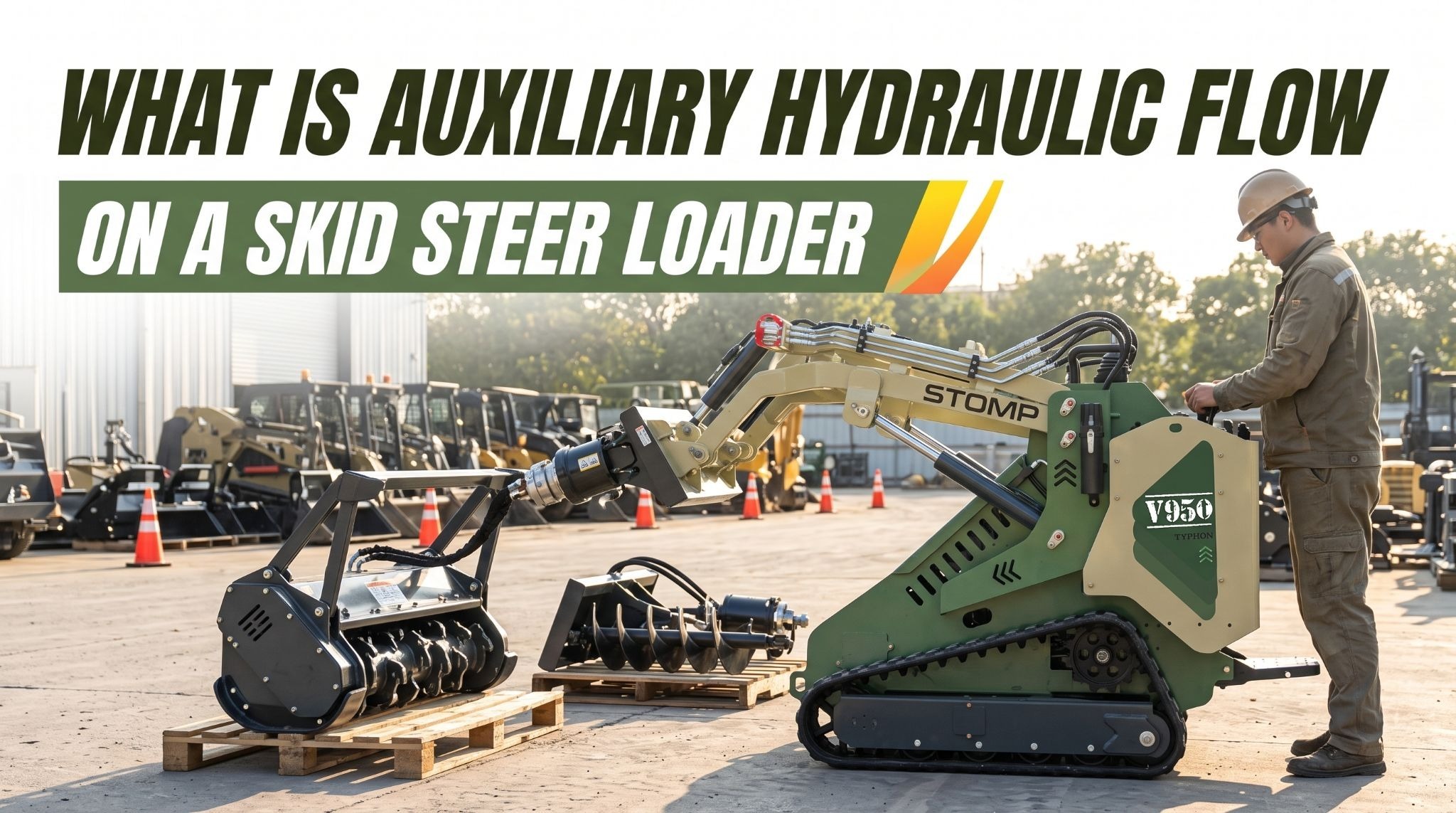
The auxiliary circuit is what turns a skid steer into a multi-tool platform. It sends hydraulic fluid from the machine’s hydraulic system out to an attachment, delivering the power that drives the tool. Without it, a skid steer is limited to what a bucket can do; with it, the machine takes on a whole range of powered work.
That fluid does real work once it reaches the tool. The auxiliary circuit can operate attachments such as trenchers, augers, brush cutters, grapples, and other hydraulic equipment, each drawing on that flow to run its motor or cylinders. A trencher’s cutting chain, an auger’s rotation, a brush cutter’s blade, and a grapple’s grip all depend on hydraulic power routed through this circuit. Understanding that the auxiliary system is the source of that power is the starting point for matching any tool to the machine.
Key takeaway: The auxiliary circuit sends hydraulic fluid from the skid steer to an attachment, powering tools such as trenchers, augers, brush cutters, and grapples beyond basic bucket work.
Flow Rate Affects Attachment Operation
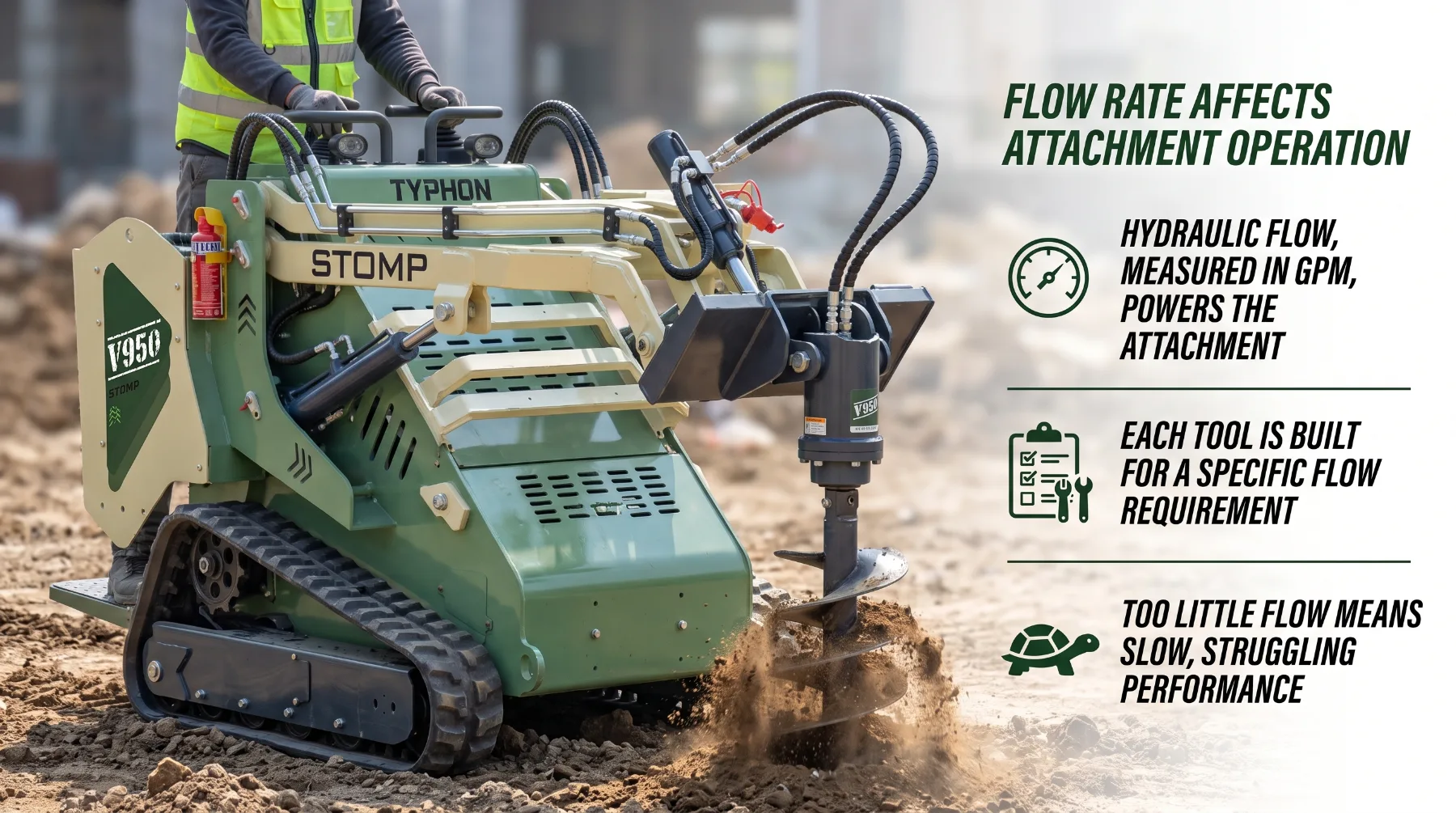
How well a hydraulic attachment runs comes down largely to flow. Hydraulic flow is commonly measured in gallons per minute, or GPM, which describes how much hydraulic fluid moves through the system. The available flow determines how much fluid actually reaches the attachment during operation, and that supply is what sets the pace of the work.
This is where compatibility becomes essential. Attachments are designed around particular flow requirements, so a tool built for a certain GPM needs a machine that can deliver it. Supply too little, and the attachment runs slowly or struggles under load, exactly the sluggish performance that signals a mismatch. Because each tool has its own flow needs, checking that the loader’s available flow suits the attachment is a step worth taking every time. Matching the flow to the tool keeps it running at the speed it was built for.
Key takeaway: Hydraulic flow, measured in GPM, determines how much fluid reaches the attachment, and since attachments are designed around specific flow requirements, compatibility matters.
Standard and High Flow Systems Differ
Not all skid steers deliver the same auxiliary flow, and that difference shapes which attachments a machine can run. Some skid steers offer standard auxiliary flow, which suits a broad range of common tools. Others are equipped for high-flow operation, built to supply the greater volume that more demanding attachments require.
The distinction matters when you reach for a tool that needs more. High-flow systems can support attachments that require greater hydraulic flow than a standard system provides, so certain tools simply won’t perform on a standard machine. The reliable way to sort this out is to compare the attachment manufacturer’s requirements against the loader’s available auxiliary specifications. Those figures tell you plainly whether a given tool suits the machine you have. Confirming the match in advance means the attachment runs as intended rather than falling short of its potential.
Key takeaway: Skid steers offer either standard or high-flow auxiliary systems, so compare the attachment manufacturer’s requirements against the loader’s available auxiliary specifications to confirm the match.
Pressure Also Plays a Role
Flow tells only part of the hydraulic story. System pressure is the other half, and it affects the force available to operate hydraulic components and motors. Where flow governs how fast a tool runs, pressure governs how much force it can apply, and both are at work every time an attachment operates.
The two have to line up together for a tool to perform. An attachment needs both suitable flow and suitable pressure to operate as intended, since strong flow with insufficient pressure, or the reverse, still leaves the tool short of what it needs. A hydraulic motor turning a heavy cutting head, for example, relies on flow to keep it moving and pressure to give it the force to cut. Checking both figures against the attachment’s requirements, rather than flow alone, gives you the full picture of whether the machine can run the tool properly.
Key takeaway: Pressure affects the force available to operate hydraulic components and motors, so an attachment needs both suitable flow and suitable pressure to operate as intended.
Attachment Size Matters
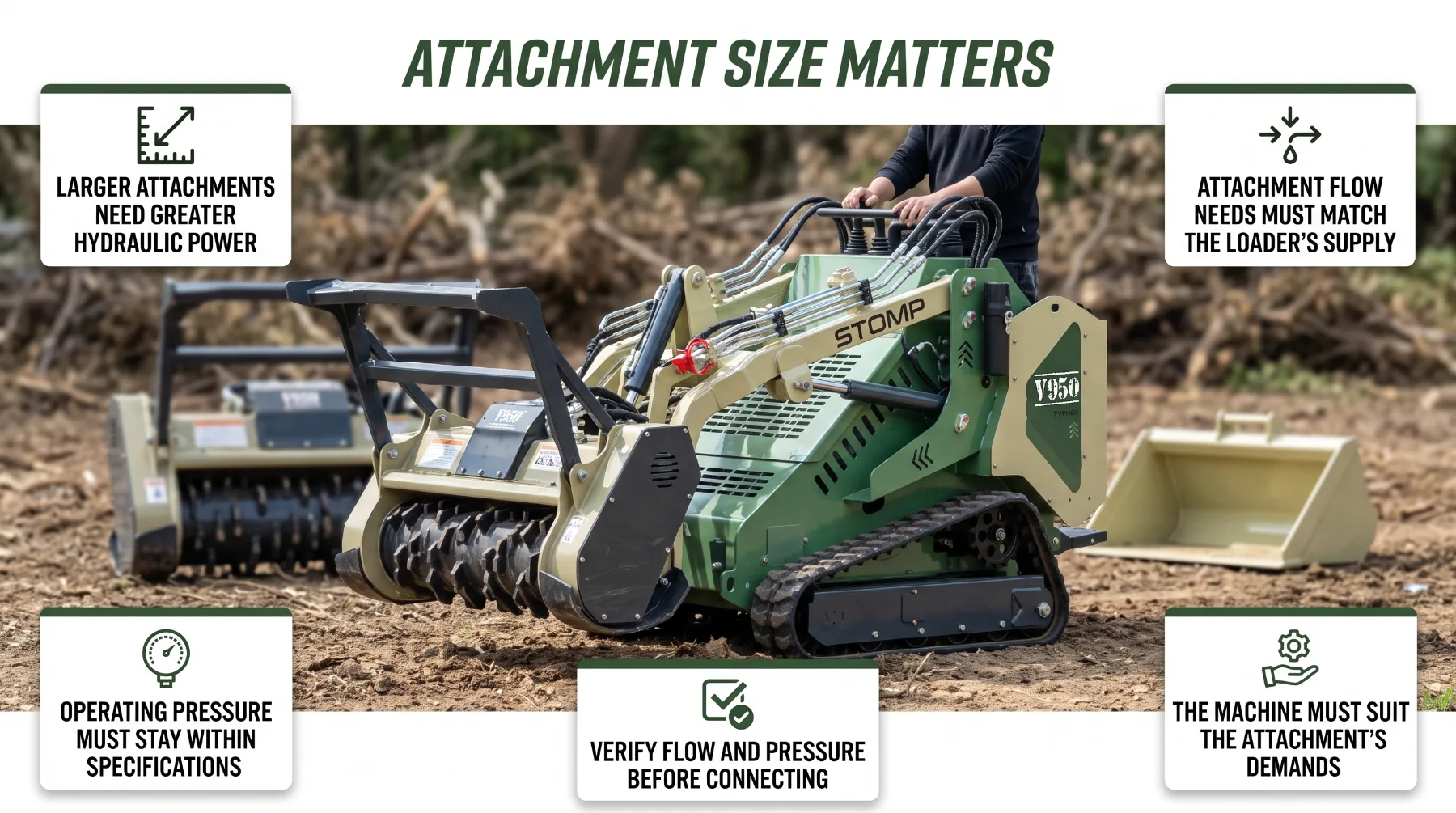
Attachment size directly affects the hydraulic demand placed on a machine. Larger hydraulic attachments may require greater flow and pressure because their motors and working components need more hydraulic power to operate effectively. As attachment size increases, the machine must have enough hydraulic capability to support the tool’s requirements.
Using an attachment beyond the machine’s hydraulic capacity can lead to poor performance and unnecessary system strain. Before connecting an attachment, operators should compare the attachment’s required flow and pressure with the loader’s specifications to confirm that both are properly matched.
- Attachment Size: Larger tools can require greater hydraulic power to operate effectively.
- Hydraulic Flow: The attachment’s required flow should match the loader’s available hydraulic flow.
- Hydraulic Pressure: Required operating pressure must remain within the machine’s hydraulic specifications.
- Machine Capability: An attachment should be suitable for the loader’s available hydraulic and operating capacity.
- Compatibility Check: Verify flow, pressure, and attachment requirements before connecting and operating the tool.
Key takeaway: Larger attachments may need more flow and pressure than smaller tools, and using one outside the machine’s hydraulic capability can cause poor performance or excessive demand, so always verify compatibility before connecting.
Proper Hydraulic Maintenance Helps
A well-matched attachment still depends on a healthy hydraulic system to perform. Clean hydraulic fluid, properly maintained filters, sound hoses, and secure connections all support auxiliary circuit performance, keeping fluid moving cleanly from the machine to the tool. Each of these is part of what lets the circuit deliver the flow and pressure an attachment relies on.
Neglecting that upkeep shows up quickly in the work. Leaks or contaminated fluid can affect attachment operation and may lead to component wear over time, turning a small maintenance oversight into a performance problem or a costly repair. A leak reduces the fluid reaching the tool, and contaminated fluid can damage the components it flows through. Keeping the fluid clean, the filters serviced, the hoses in good condition, and the connections secure protects both the performance of your attachments and the longevity of the hydraulic system itself. Steady maintenance is what keeps the whole circuit dependable.
Key takeaway: Clean fluid, maintained filters, sound hoses, and secure connections support auxiliary circuit performance, while leaks or contaminated fluid can affect attachment operation and lead to component wear.
Conclusion
Auxiliary hydraulic flow gives a skid steer the ability to power attachments such as trenchers, augers, brush cutters, grapples, and other hydraulic tools beyond standard bucket work. Flow rate, measured in GPM, determines how much hydraulic fluid reaches the attachment and influences operating speed, while pressure provides the force needed for the attachment to perform under load. Both must match the attachment manufacturer’s requirements, with standard-flow and high-flow systems serving different tool demands and larger attachments often requiring greater hydraulic capacity. The condition of the hydraulic circuit also affects performance, making clean fluid, serviceable filters, sound hoses, and secure connections important parts of regular maintenance. Before connecting an attachment, verify the required flow and pressure against the skid steer’s auxiliary specifications, confirm the hydraulic system type, and inspect all connection points for wear or leaks. Matching the hydraulic system to the attachment and maintaining the circuit properly helps the skid steer deliver reliable performance across a wide range of hydraulic applications.
Frequently Asked Questions
What is auxiliary hydraulic flow?
Auxiliary hydraulic flow is the rate at which hydraulic fluid is supplied through a skid steer’s auxiliary circuit to operate hydraulic attachments. Trenchers, augers, brush cutters, and grapples depend on this flow to power their motors or cylinders. Flow is usually measured in gallons per minute and affects attachment performance. Since different tools require different flow rates, the skid steer’s auxiliary flow should match the attachment’s specifications.
What does GPM mean?
GPM means gallons per minute and measures how much hydraulic fluid the auxiliary circuit delivers during operation. Flow rate largely affects an attachment’s operating speed, so too little flow can cause slow or weak performance. Compare the attachment’s required GPM with the skid steer’s available flow to confirm compatibility. Standard-flow and high-flow systems support different ranges of hydraulic attachments.
Is hydraulic flow the same as pressure?
No. Flow and pressure perform different functions. Flow, measured in GPM, largely affects how quickly an attachment operates, while pressure determines the force available to perform work. A hydraulic motor needs sufficient flow for speed and pressure for working force. Both specifications should be checked against the attachment’s requirements because adequate flow alone does not guarantee proper performance.
Why should attachment flow requirements be checked?
Attachment flow requirements should be checked to confirm the skid steer can supply the flow and pressure the tool needs. Too little flow can cause slow operation, while an attachment that exceeds the machine’s hydraulic capacity can place unnecessary demand on the system. Standard-flow and high-flow machines also support different attachments. Comparing the attachment requirements with the skid steer’s auxiliary specifications helps prevent compatibility and performance problems.