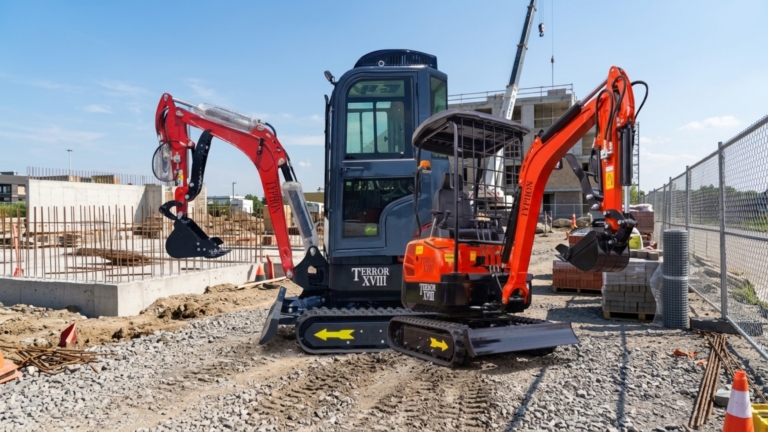
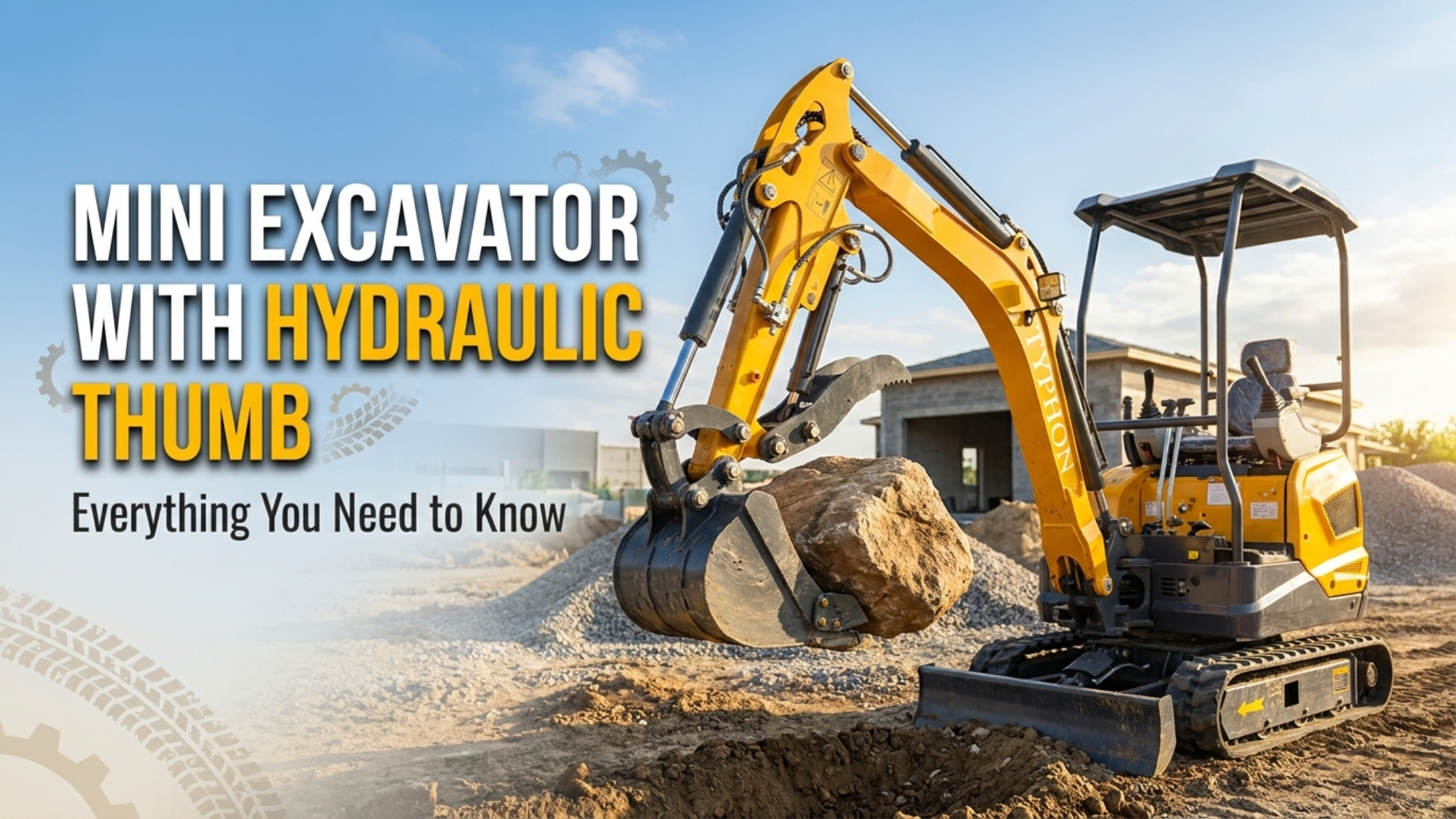
A mini excavator digs, trenches, and grades with impressive precision, but on its own it can only push awkward material around. Add a hydraulic thumb, and everything changes. The machine gains the power to grab, grip, and place logs, rocks, broken concrete, and pipe with real control. For contractors, landscapers, and equipment buyers, that single upgrade turns a digging machine into a genuine material-handling tool.
This guide gives you a complete, practical look at the mini excavator hydraulic thumb. You’ll learn exactly how it works, where it delivers the most value, and how to choose the right one for your machine and your work.
Here’s what you’ll take away:
- What a hydraulic thumb is and how it works
- The key benefits that show up on your bottom line
- Common applications across land clearing, demolition, landscaping, and utility work
- A complete buyer’s guide, plus safety and maintenance best practices
Now let’s start with the fundamentals before moving into the buying decision.
What Is a Hydraulic Thumb Attachment?
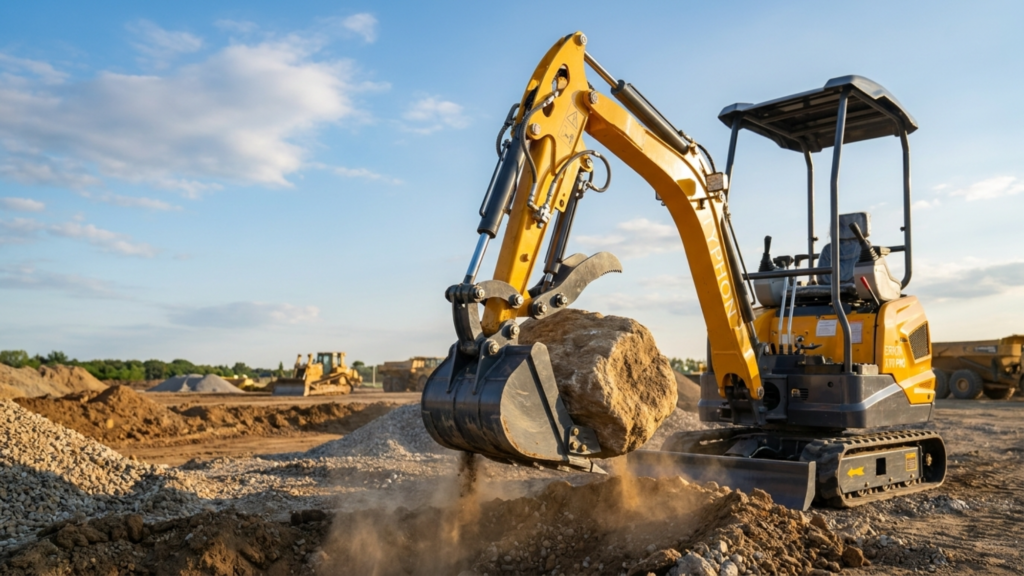
A hydraulic thumb is a hinged, claw-like attachment mounted to the arm of a mini excavator, positioned to work opposite the bucket. When the operator activates it, the thumb closes toward the bucket and clamps material securely between the two. In short, it gives your excavator an opposable grip, much like adding a thumb to a hand that only had fingers.
Unlike a fixed or mechanical thumb, a hydraulic thumb moves independently through its own hydraulic cylinder. That means the operator adjusts the grip and angle in real time, right from the cab, without stopping to reposition anything by hand.
The value here is straightforward. A bucket digs and scoops well, but it can’t hold irregular objects. The thumb closes that gap and lets one machine both dig and grab.
How Does a Hydraulic Thumb Work?
The thumb ties into the excavator’s auxiliary hydraulic circuit and runs off a dedicated cylinder. The operator opens and closes it from the cab, clamping material against the bucket’s teeth or cutting edge. Here’s the basic sequence in practice.
- Position the machine: Line up the bucket and thumb over the object you want to grab.
- Open the thumb: Extend it fully to create room for the material.
- Curl the bucket in: Bring the bucket toward the material as you close the thumb around it.
- Clamp and lift: Squeeze the object firmly between bucket and thumb, then raise and swing it into place.
- Release: Open the thumb and roll the bucket out to set the load down cleanly.
Because the thumb moves independently, the operator can grip loads of many shapes and sizes and fine-tune the hold on the fly. That responsiveness is exactly what a mechanical thumb, which only sets in fixed positions, can’t match.
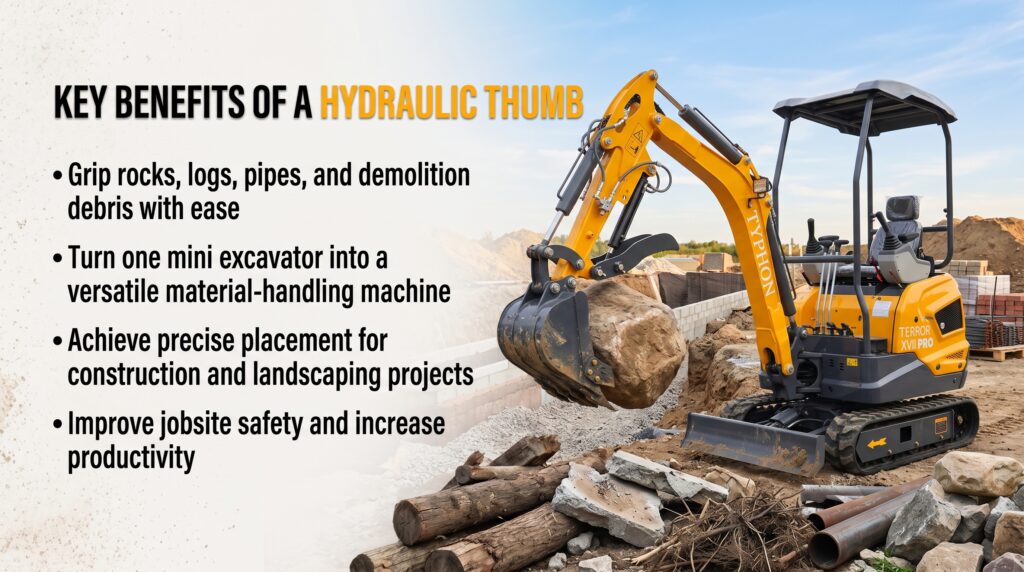
Key Benefits of a Hydraulic Thumb
The advantages go well beyond convenience. For a working business, they show up directly on your schedule and your bottom line.
Grip What a Bucket Can’t Handle
A hydraulic thumb secures rocks, logs, pipe, brush, and broken concrete that a bucket can only slide or shove. That grip lets one machine tackle handling work that would otherwise demand extra equipment or manual labor.
Greater Versatility From One Machine
With a thumb installed, your mini excavator digs, grades, and handles material without swapping to another machine. You accomplish more in a single setup, which keeps your fleet lean and your crew moving.
Improved Precision and Control
Because the operator controls the thumb independently, placing material becomes precise work. That control matters when you’re setting rock for a retaining wall, positioning pipe in a trench, or stacking debris close to obstacles.
Better Safety and Productivity
Lifting heavy, awkward objects by hand invites injury and slows the whole crew. A thumb lets one operator move that material quickly and safely, freeing your team for skilled tasks and trimming labor on every load.
Common Applications
A hydraulic thumb earns its place across many industries. Wherever irregular material needs gripping, lifting, and placing, the attachment delivers real value. Here’s where it works hardest.
Land Clearing
On land-clearing jobs, the thumb grips logs, stumps, root balls, and brush, letting the operator pile debris neatly or load it straight onto trucks. Picture a crew clearing a wooded lot: instead of nudging logs into loose piles and hoping they hold, the operator grabs each one, lifts it, and stacks it with control. That’s the difference between shoving material around and truly handling it.
Demolition
During demolition and cleanup, the thumb grabs broken concrete, rebar, and rubble that a bucket can’t hold securely. The operator can sort salvageable material from waste and load debris efficiently, keeping the site clean as the work moves forward.
Landscaping and Grading
For hardscape and landscaping work, the thumb places boulders, sets retaining wall stone, and positions large rock with precision. That capability turns rough grading into finished, detailed placement your clients will notice.
Utility and Trenching Work
On utility jobs, the thumb lifts and lowers pipe, culverts, and conduit into trenches with control the bucket alone can’t provide. It also clears rock and debris from the trench line as the crew progresses, saving repeated trips and manual cleanup.
Complete Buyer’s Guide: Choosing the Right Hydraulic Thumb Clip with Excavator
Now that you know what a thumb does and where it shines, let’s turn to the buying decision. The right thumb depends on your machine, your bucket, and the work you do most. Weigh these four factors carefully before you commit.
Pin-On vs. Quick-Attach
The mounting style shapes how easily you install and remove the thumb.
- Pin-on thumbs bolt or pin directly to the excavator arm for a rugged, permanent setup. They’re strong and cost-effective but slower to remove.
- Quick-attach thumbs mount to a coupler system for faster changes, giving you more flexibility if you swap attachments often.
Choose pin-on for a dedicated, always-ready thumb, or quick-attach if you frequently switch between tools throughout the day.
Progressive Link vs. Rigid Design
Thumb geometry affects how well it grips varied loads.
- Rigid (single-pivot) thumbs are simple and durable, best for consistent, straightforward gripping.
- Progressive-link thumbs rotate through a wider arc and stay more parallel to the bucket, gripping a broader range of object sizes securely.
If your work involves a wide mix of material shapes and sizes, a progressive-link design usually pays off. For repetitive, predictable loads, a rigid thumb keeps things simple and tough.
Sizing to the Machine and Bucket
A thumb must match your excavator’s weight class and bucket. An oversized thumb strains the machine, while an undersized one can’t grip effectively or lift what you need. Get this right, and everything else falls into place.
- Match the thumb to your excavator’s operating weight and tonnage
- Confirm it aligns with your bucket’s teeth and width
- Verify your machine has the auxiliary hydraulics to run it
Build Quality
Look for high-strength steel tines, reinforced pivot points, and quality hydraulic cylinders built for sustained use. A well-built thumb withstands the heavy, repeated stress that gripping and lifting demand, delivering years of dependable service. Cutting corners here means downtime and replacement costs down the road, so treat build quality as a core requirement, not an upgrade.
Common Mistakes to Avoid
A few missteps show up again and again with first-time buyers. Steer clear of these, and you’ll get the right tool the first time.
- Ignoring hydraulic capacity: Buying a thumb before confirming your machine has auxiliary hydraulics to run it.
- Mismatched sizing: Choosing a thumb by price rather than matching it to your machine’s weight class and bucket.
- Overlooking the bucket pairing: Forgetting that the thumb and bucket must align to grip properly.
- Skimping on build quality: Saving upfront on a light-duty thumb that fails under real workloads.
Safety Best Practices
A hydraulic thumb changes how the machine handles loads, so a few disciplined habits protect your crew and your equipment. Make these standard practice on every job.
- Know your limits: Never lift beyond the excavator’s rated capacity, and account for the load’s reach from the machine.
- Grip securely: Center the material between the bucket and thumb, and confirm a firm hold before lifting.
- Keep loads low: Carry gripped material close to the ground for stability and better visibility.
- Watch your swing: Keep workers clear of the swing radius and the load’s travel path at all times.
- Mind the terrain: Work on stable ground and avoid lifting on steep slopes where the machine could tip.
- Release carefully: Set loads down deliberately and confirm they’re stable before opening the thumb.
- Set down before you step away: Lower the attachment fully and follow shutdown procedure before leaving the cab.
Treat these as a daily routine, not an occasional checklist. Consistent habits are what keep every lift incident-free.
Maintenance Tips
A hydraulic thumb is built tough, but it still needs attention to stay safe and reliable. A quick routine prevents small problems from becoming serious failures.
- Inspect the tines and welds: Check regularly for cracks, bends, and excessive wear, especially at high-stress points.
- Check the cylinder and hoses: Look for leaks, damaged hoses, and loose fittings in the hydraulic connections.
- Grease the pivot points: Lubricate pins and bushings on schedule to prevent wear and keep movement smooth.
- Confirm secure mounting: Verify pins, bolts, or the coupler remain tight and fully engaged before each use.
- Keep it clean: Clear away built-up mud and debris that can hide damage or interfere with movement.
A few minutes of inspection before each use catches issues early and keeps the thumb working safely for years.
Key Takeaways
Before you make the call, here’s the short version worth remembering:
- A hydraulic thumb gives your mini excavator the ability to grip, lift, and place material a bucket can’t handle.
- Its biggest wins are versatility, precision, safety, and productivity, all from one machine.
- Match the mounting style, geometry, size, and build quality to your specific machine and workload.
- Confirm your machine’s auxiliary hydraulics before you buy.
- Consistent safety and maintenance habits protect both your crew and your investment.
Put a Hydraulic Thumb to Work
A hydraulic thumb is one of the smartest upgrades you can make to a mini excavator. It brings genuine gripping and handling capability to a machine you already own, letting you clear land, demolish structures, place rock, and set pipe with a level of control a bucket alone can’t match. For contractors, landscapers, and equipment buyers, that added versatility delivers real value on every job.
Your next step is simple. Size the thumb to your machine and bucket, choose the mounting style and design that fit your work, and commit to consistent safety and maintenance habits. Do that, and one attachment will pay for itself many times over.
Ready to get more out of your mini excavator? Explore our selection of hydraulic thumb options, compare mounting styles and sizing for your model, and talk with our team about the right fit for your machine and your work. Reach out today for expert guidance and a quote you can count on.