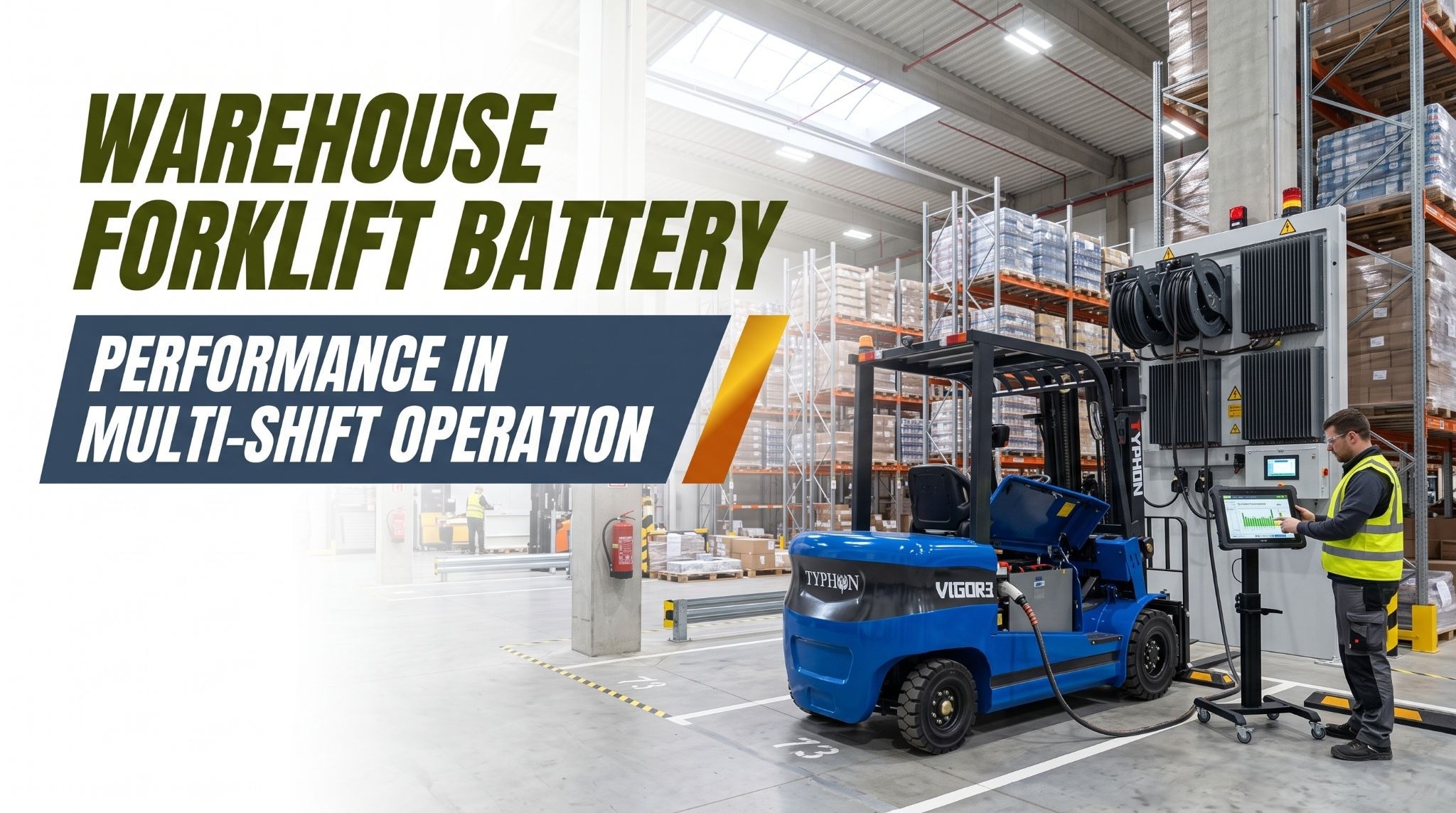
Keeping a warehouse running across multiple shifts puts constant demand on its forklift fleet. Receiving trucks arrive, pallets move into storage, orders are picked, and outbound loads are prepared throughout the day. When a forklift has to leave the floor for an unexpected charge, that gap can quickly affect the rest of the operation. Receiving areas become crowded, picking slows down, and other trucks may have to cover work that was assigned to the unavailable machine.
Battery capacity becomes especially important when electric forklifts operate for extended hours. A battery needs enough stored energy to support the expected workload, while the charging setup must provide enough recovery time between shifts or during planned breaks. Maintenance also affects how consistently the battery delivers usable power over its service life. These factors work together, so a fleet can experience avoidable downtime even when the battery’s rated capacity appears sufficient on paper.
For multi-shift operations, battery planning should account for actual duty cycles rather than a single runtime figure. Travel distance, load weight, lift frequency, operating conditions, charging windows, and battery age can all influence available working time. Matching those demands to a practical charging and maintenance schedule helps keep forklifts ready for the next shift and reduces interruptions to continuous material handling.
Matching Battery Capacity to Workload
Battery capacity should reflect what the forklift actually does, not simply how long a shift lasts. Two trucks running identical eight-hour shifts can draw very different amounts of energy depending on the work in front of them. A machine making short hauls with light loads sips power, while one running long aisles with heavy pallets and constant lifting drains a battery far faster.
The factors that push consumption up are consistent: frequent lifting, long travel distances, heavy loads, and continuous operation with little idle time. When you size a battery around shift length alone, you risk buying runtime that looks adequate on paper but falls short under a demanding duty cycle. Instead, match capacity, described through voltage and amp-hour ratings, to the intensity of the real workload.
Key takeaway: Size battery capacity to the forklift’s actual duty cycle, since heavy, high-cycle work drains energy far faster than shift length alone suggests.
Planning Charging Around Shift Changes
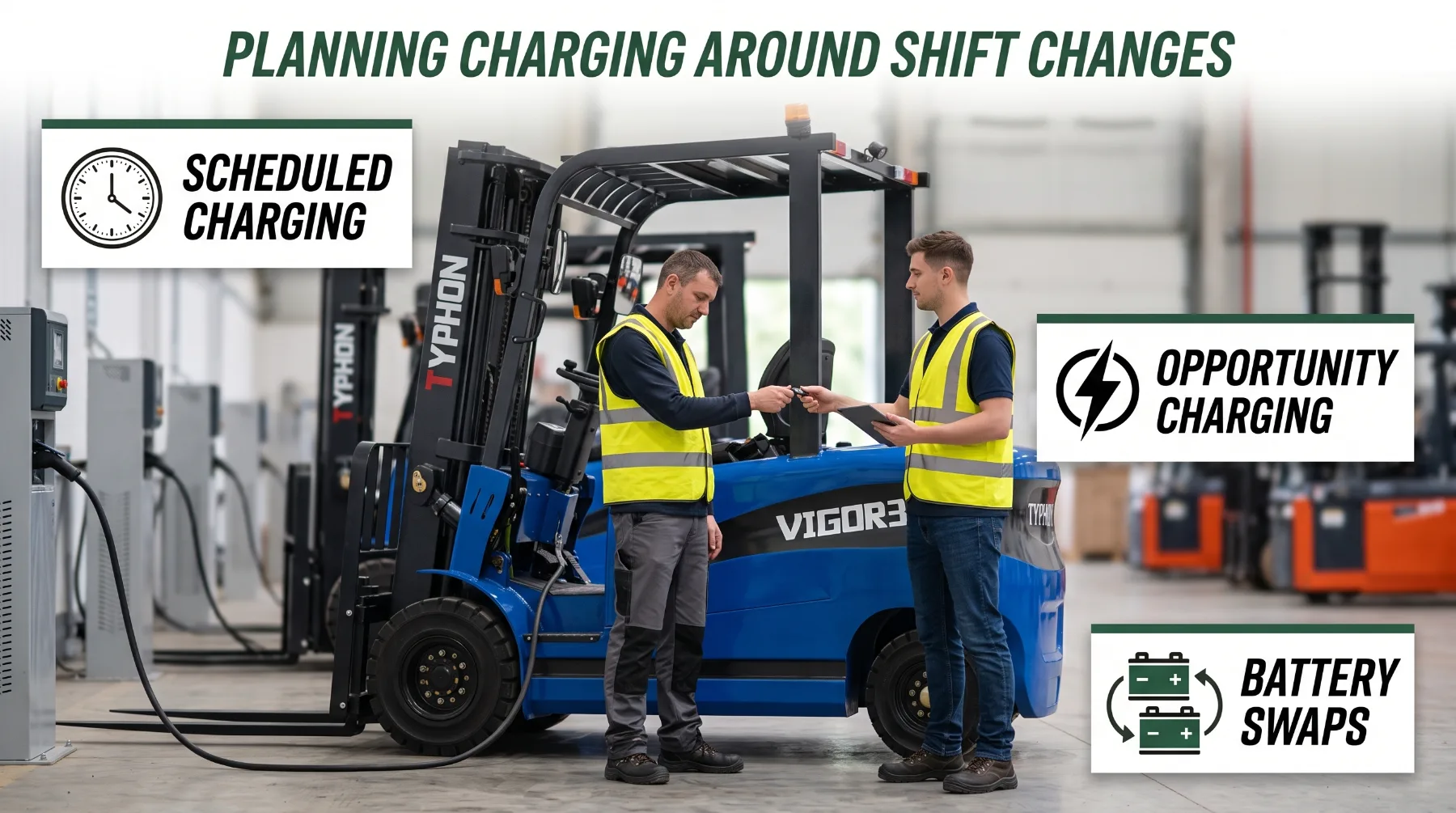
The gap between shifts is your most valuable charging window, and a strong plan is built around it. When charging is coordinated with operator handoffs and planned downtime, a truck can top up or swap out while it would otherwise sit idle. When charging happens randomly mid-shift, it steals productive hours instead.
Warehouses generally use one of three strategies, depending on the equipment and battery system:
- Scheduled charging: Charge each truck fully during set downtime, such as between shifts or over breaks. This suits single or two-shift operations with clear gaps.
- Opportunity charging: Top up batteries in short bursts during breaks and brief pauses to extend availability across long days. Confirm the battery and charger support this approach.
- Battery swaps: Pull a depleted battery and drop in a charged one, returning the truck to work in minutes. This fits demanding three-shift operations but requires spare batteries and a safe changing area.
Key takeaway: Coordinate charging with shift changes and downtime using scheduled charging, opportunity charging, or battery swaps to keep trucks available.
Monitoring Energy Consumption
You can’t plan a fleet well without knowing how it uses energy. Tracking battery usage across the workday reveals patterns that tell you which trucks work hardest, which tasks drain the most, and where runtime falls short. That visibility turns charging and assignment decisions from guesswork into planning.
Certain activities reliably spike consumption: repeated high-load lifting, extended travel between distant zones, and frequent acceleration in stop-and-go picking. When you see a truck consistently running low before its shift ends, the data points you toward a fix, whether that’s reassigning it to lighter work, adding a charging window, or moving it to a larger battery. Many modern forklifts and battery systems offer built-in monitoring, and even simple logging of charge levels at shift’s end builds a useful picture over time.
Key takeaway: Track battery usage to identify energy demand patterns, which supports smarter charging schedules and fleet assignments.
Maintaining Battery Condition
A battery’s runtime depends heavily on its condition, and condition depends on consistent care. Performance declines quickly when charging procedures are inconsistent or maintenance gets skipped, and a fleet full of neglected batteries loses capacity, charges less predictably, and forces more frequent downtime.
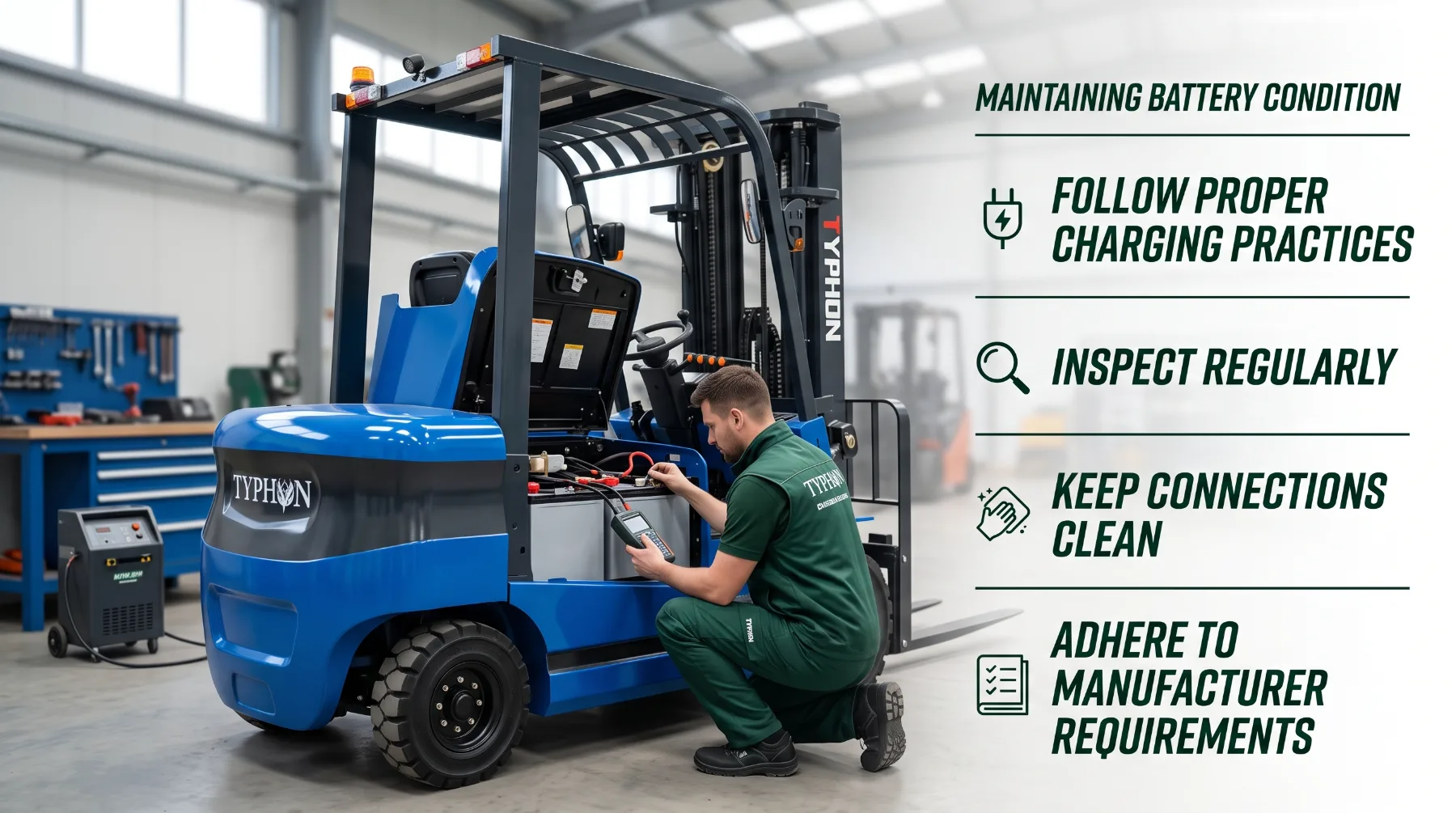
Good maintenance comes down to a few reliable habits:
- Follow proper charging practices. Charge according to the battery manufacturer’s guidance rather than improvising, since poor charging wears a battery prematurely.
- Inspect regularly. Routine checks catch problems, such as low fluid on flooded lead-acid batteries or damaged cables, before they cut into performance.
- Keep connections clean. Corroded or loose connections waste energy and cause charging trouble, so clean, tight terminals matter.
- Adhere to manufacturer requirements. The battery maker’s specifications tie these habits into a routine that protects capacity over the battery’s service life.
Key takeaway: Consistent charging, regular inspections, and clean connections keep batteries holding their rated capacity and running dependably across shifts.
Managing Multiple Forklift Units
A multi-shift warehouse rarely leans on a single truck all day. Spreading the work across several electric forklifts keeps any one battery from being pushed to exhaustion and gives you room to rotate machines through charging without stalling material flow. Managed well, a fleet stays available where a single hard-worked unit would not.
The key is deliberate assignment. Match each truck to the work based on its capacity, the travel routes it will run, the load weights it must handle, and the charging windows available to it. A higher-capacity truck can take the heaviest, longest-running zone, while a lighter unit handles short hauls near a charger. Staggering charging across the fleet, so trucks cycle in and out rather than all needing power at once, keeps enough machines on the floor at every hour.
Key takeaway: Distribute workloads across the fleet and assign trucks by capacity, routes, loads, and charging windows to keep machines available around the clock.
Considering Temperature and Environment
Batteries are sensitive to their surroundings, and operating temperature has a direct effect on performance. Cold environments, such as refrigerated warehouses and freezer storage, reduce available capacity and can lengthen charging. Hot areas stress batteries and can shorten their life. Either extreme demands closer attention to battery management.
The charging environment matters just as much. Charging areas need proper ventilation, especially for flooded lead-acid batteries that release gas during charging, and poorly ventilated spaces create both safety and performance concerns. Follow the manufacturer’s recommendations for operating and storage temperatures, and account for your facility’s conditions when planning runtime. A truck rated for a full shift in a mild warehouse may deliver noticeably less in a freezer, so plan capacity and charging with the actual environment in mind.
Key takeaway: Operating and charging temperatures affect battery capacity and life, so cold, hot, and poorly ventilated conditions require extra management and adherence to manufacturer guidance.
Conclusion
Reliable multi-shift electric forklift operation depends on matching battery energy capacity, charging infrastructure, and workload to the fleet’s actual duty cycle. Battery capacity should be evaluated against load weight, travel distance, lift frequency, operating hours, and energy consumption rather than shift duration alone. Charging schedules can be coordinated with shift changes through planned charging periods, opportunity charging where supported, or battery replacement systems for operations with limited downtime. Monitoring energy use by truck can identify differences in workload, battery condition, and operating efficiency and help fleet managers assign machines according to capacity and available charging windows. Battery maintenance should include correct charging procedures, inspection of terminals and connections, electrolyte or battery-system requirements where applicable, and regular condition checks. Ambient temperature and charging-area ventilation also affect battery performance and charging conditions, particularly in facilities with high heat or limited airflow. Reviewing runtime, state of charge, charging duration, load profile, and energy consumption over a representative operating period provides a practical basis for adjusting battery capacity, charging schedules, and fleet assignments to reduce downtime and maintain consistent material-handling performance across multiple shifts.
Frequently Asked Questions
How long can a forklift battery last during a shift?
Runtime depends on battery capacity, forklift model, load weight, travel distance, lift frequency, and duty cycle. Short trips and lighter loads may allow a battery to last a full shift, while heavy loads, frequent lifting, long travel, or extreme temperatures can reduce runtime. Base charging plans on the forklift’s actual workload rather than a best-case rating.
How can warehouses support multi-shift forklift use?
Coordinate charging or battery swaps with shift changes and planned downtime. Monitor battery usage to identify high-demand trucks and distribute workloads across the fleet. Depending on the operation, use scheduled charging, opportunity charging, or battery swaps. Regular maintenance and temperature management also help keep forklifts available across multiple shifts.
Does heavy lifting reduce forklift battery runtime?
Yes. Frequent lifting of heavy loads requires more energy and can reduce runtime faster than lighter work. Heavy loads also increase power demand during travel. Forklifts handling demanding duty cycles may need a larger battery or more frequent charging, so battery capacity should match the actual workload.
How can forklift battery performance be maintained?
Follow the battery manufacturer’s charging and maintenance procedures and inspect the battery and connections regularly. Check flooded lead-acid batteries for proper fluid levels and look for damaged cables or corroded terminals. Keep connections clean and secure, maintain suitable temperatures, and ensure charging areas are properly ventilated.